This week’s Throw Back Thursday Fly is the McGinty fly.
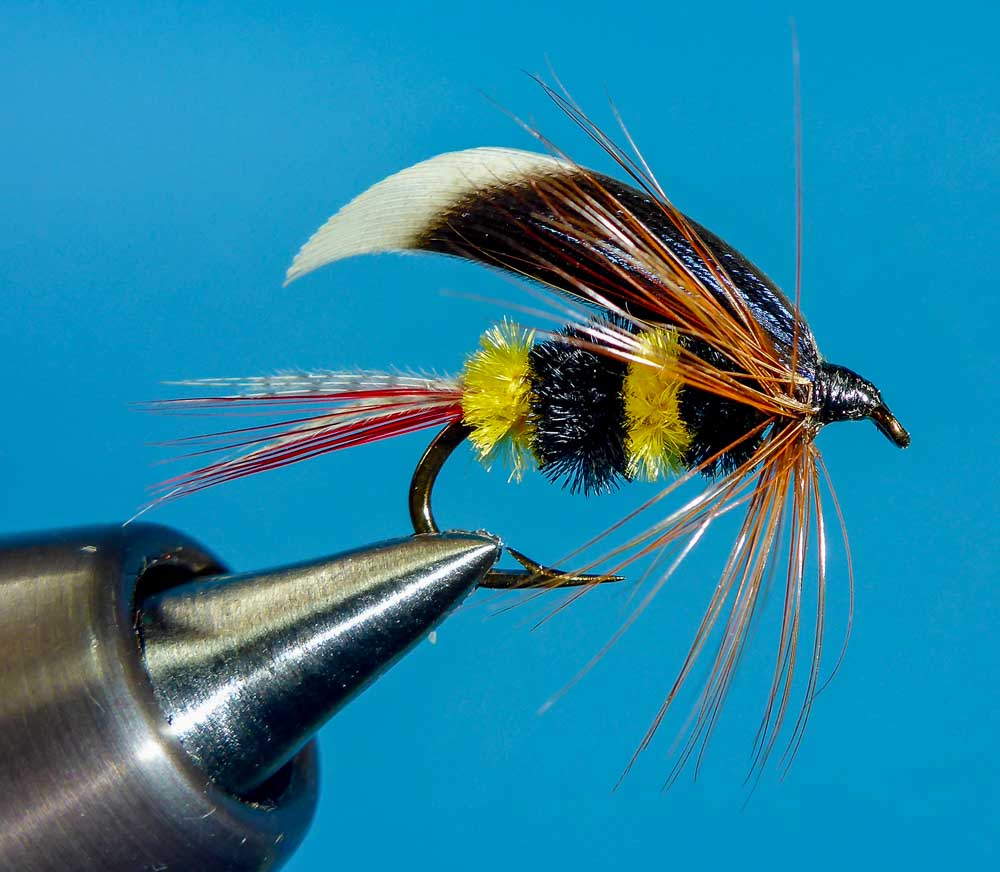
The McGinty is one of the images Wayne Luallen sent me of flies from Buz Buszek’s fly box. Some of the flies in his box were tied by Buz, while others were probably selected from bins in from his fly shop. It’s just a little bit of history I enjoy sharing with you.
Here is another variation of the fly, it was labeled McGinty Bucktail Squirrel Tail Wing.
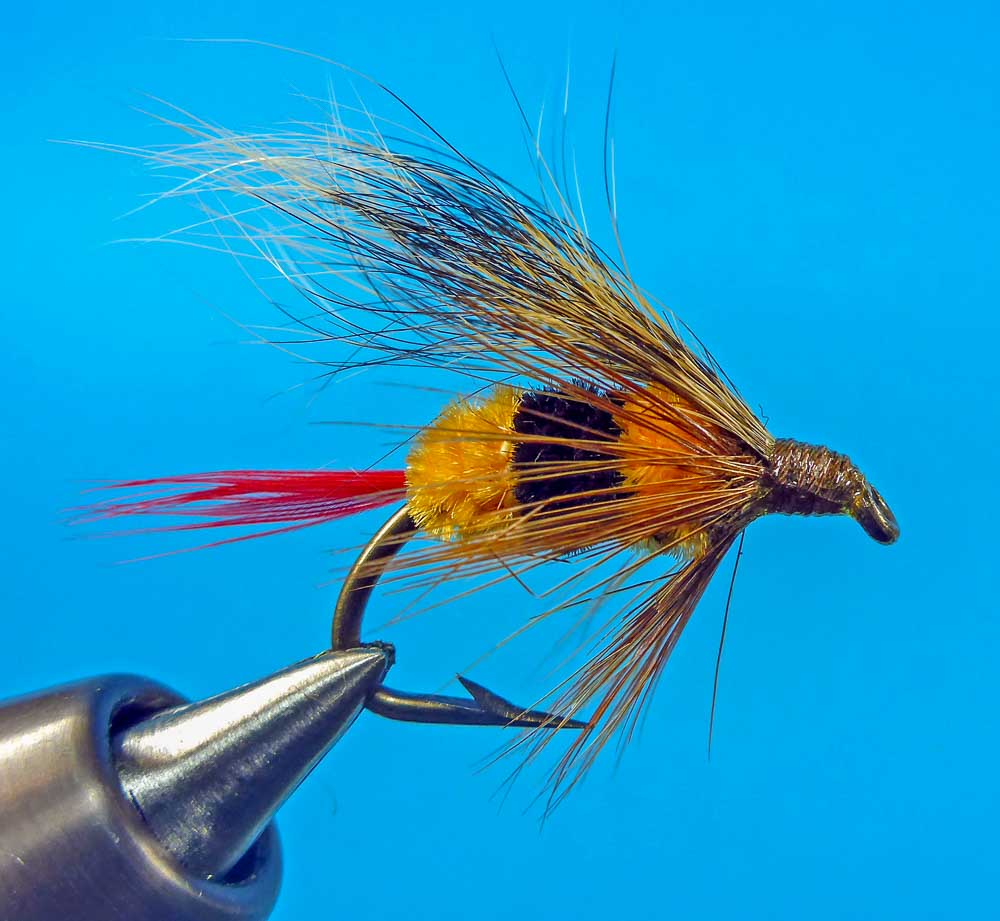
One of the sources I found from a quick search for the fly stated Charles McGinty from Chicago developed the fly in 1883 to fish for bass. There was no source given, so I don’t know if this is accurate or not.
I decided to search my Links to Free Old Fly Fishing & Fly Tying Books page to see if there was a book or two where I could find out more about the fly.
The following information is quoted from Harold Hinsodill Smedley’s book entitled Fly Patterns and Their Origins (1944).
“Unstinted research has failed to disclose any authoritative history of this fly but William B. Mershon (see Mershon) says:
“It appeared about the time of that old song, ‘Down Went McGinty to the Bottom of the Sea’ and I think that may be the occasion of the naming of that once very popular fly”.
This unusual, naive and pugnacious Irish song was written by Joseph Flynn and first sung in Hyde and Behman’s Theatre in Brooklyn, in 1889.
I know of no reason why a fly might not be named after a song and will accept that theory until and unless something better is offered.
Of the McGinty, Mr Mershon says
“There was another favorite fly that you do not hear much about these days – the McGinty. I used to use it for floating under the overhanging tag alders of the West Branch of the Rifle. With a rolling cast a little upstream the leader would unfold and the fly alight well under the overhanging alders, and almost instantly it would be taken by a big trout, for the big ones lurked there. Such trout are not to be had in Michigan, these days.”
The pattern is that of a bee.
Conroy, Bissett and Malleson brought out a long winged, long bodied bumble bee without name in 1879.
I’ve featured several of Buz’s flies in previous Throw Back Thursday Flies, including Buz’s Float N Fool Multi-Color and “Buz” Buszek Kings River Caddis are a couple of them.
Enjoy…go fish!