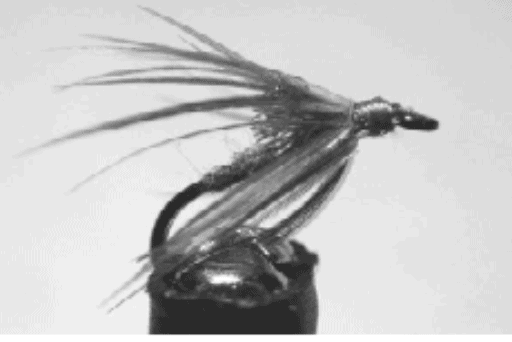
This week’s Throw Back Thursday Fly is Jim Slattery’s OD Stimulator. The OD stands for “original design”.

I’ve frequented Jim Slattery’s Campfire Lodge Resort, located on the Madison River between Hebgen and Quake lakes quite a bit when we are in the Madison Valley during our fly fishing road trips.
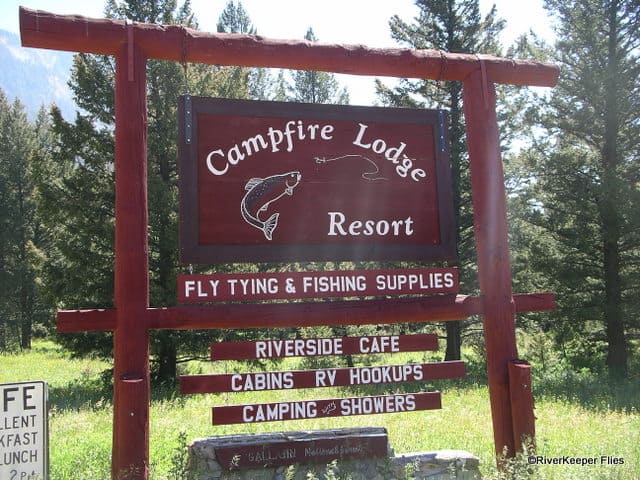

I first learned about it when our guide from Blue Ribbon Flies mentioned it was a great breakfast stop. Little did I know it was owned by Jim Slattery who is one of the top Whiting dealers in the US. I walked in the door expecting breakfast and was overwhelmed and speechless when I noticed all the feathers!

If you are a fly tyer, be sure to check out his online fly shop – Jim’s Fly Co.
I found a framed article on the wall explaining Jim originally developed the Stimulator, not Randall Kaufmann.

Jim created the Stimulator in 1980 at his apartment in New Jersey. Originally called the Fluttering Stonefly, he renamed it after a New York City punk-rock group called the Stimulators. How did he know them? Well, it turns out he had his own punk rock band called the Violators.
I read many references he was influenced by a Trude or Sofa Pillow, but in his own words, here is his explanation he wrote in a Sparse Grey Matter board post:
“To be honest the Stimulator really wasn’t influenced by the Trude or the Sofa Pillow per se, as I only had vague knowledge of those flies at the time of the Stimulators inception. The real influence on the fly’s design was a live giant eastern stonefly that I had captured that the fish were murdering on the Musconetcong River in NJ. In the span of two consecutive evenings of late-night tying sessions the fly came to being. The first version came about the first night of tying and is basically the same bug you see everywhere. There visually wasn’t any “modifying” done by Kaufmann. There may have been short cuts taken but visually no difference. The second version, the fly that started the “Stimulator” excitement was different in 2 ways. First the wing was tied in strictly at the center point of the fly. When you look at the underside of the bug the thorax clearly starts halfway on the fly, just as it does on the natural. Also importantly the wing material (Deer body hair) was NOT stacked as it was in the first version. this gave a fuller wing that looked as if they were moving. Secondly is the head of the fly, a smallish head did not look like the natural so a larger dubbed head was put on it past the palmered thorax hackle. The protruding head looked like the natural. The curved hook was also a part of both versions as imitating an ovipositing stonefly was the goal. You could see the curved body as the flies dipped down on the water or tried to break free from the surface film once they got caught in it. The hooks were hand bent Mustad streamer hooks.”
Kaufmann brought the fly to the West Coast and popularized it. I was curious what Randall said about its origin, so I pulled out my copy of Tying Dry Flies (1991). In the book, he writes “The pattern is not unique, and it closely resembles many other downwing patterns. I have borrowed it, incorporated some of my favorite materials and color combinations, and subtly improved on tying style.”
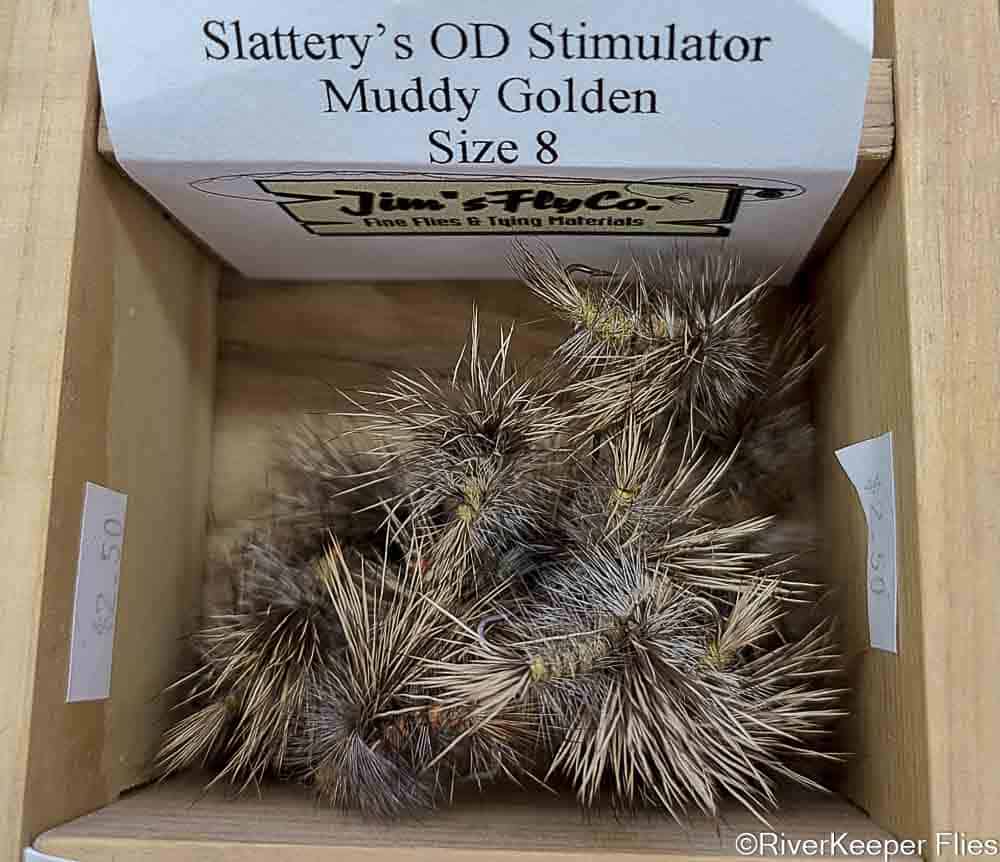
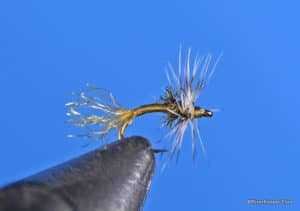
The image of the fly above is my version after viewing some flies in his bin. It’s not his original fly pattern, I’d call it a “variant”.
Enjoy…go fish, stay safe!



I love this…such a cool story 🙂
Cheers
Vladimir
Hi John,
We LOVED this post about Jim, his business, and he is located on our favorite section of the Madison River. Take care & …
Tight Lines – (Gretchen &) Al Beatty