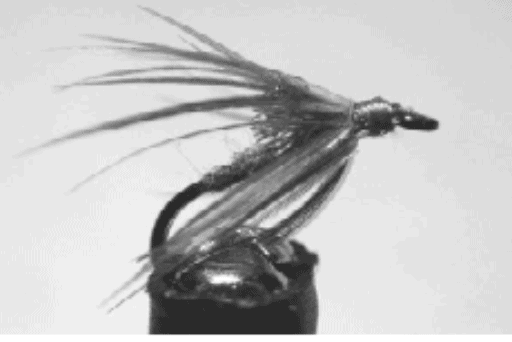
The next stop on our 2018 road trip was fly fishing the South Fork of the Snake and Teton rivers.
Our friend Mike Avery of Snake River Net Company invited us to stay with him a couple of days and enjoy the fly fishing around Idaho Falls. It was a great opportunity and didn’t take long for us to say “yes”!
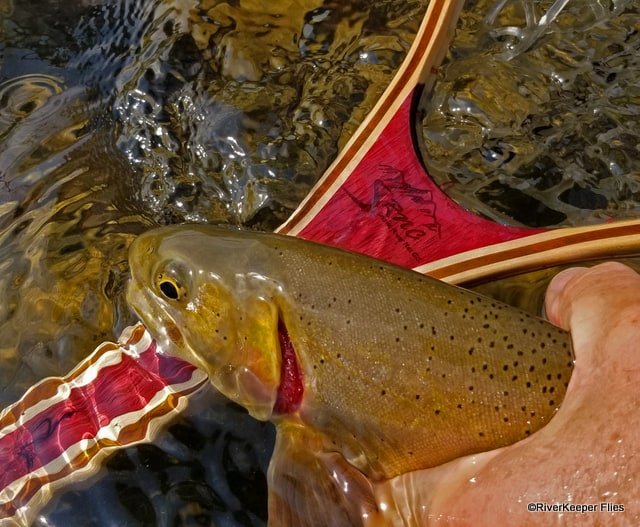
We’ve fished the South Fork once before in 2008 with a guide. I had heard about how good the fishing could be in the canyon section from reading articles in fly fishing magazines. It was worth the trip. It’s a big river and the only way to effectively fish the river is from a drift boat…and Mike has one.

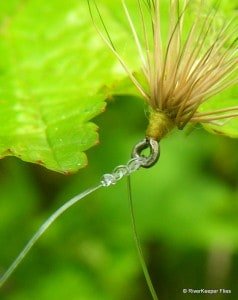
Our float was from Conant near the South Fork Lodge to Fullmer, which runs through the canyon. Mike suggested we use foam and fluffy flies because they had been successful for him in past trips. My fishing partner tried a Pink Pookie and I tied on one of my Beetle Betty flies. It wasn’t long before we started raising fish to both flies. The fish were close to the bank.

Much of the time we cast to the river’s edge as we drifted downstream. On occasion, we stopped at a riffle to cover the water and Mike was able to fish as well.

And there were fish there!
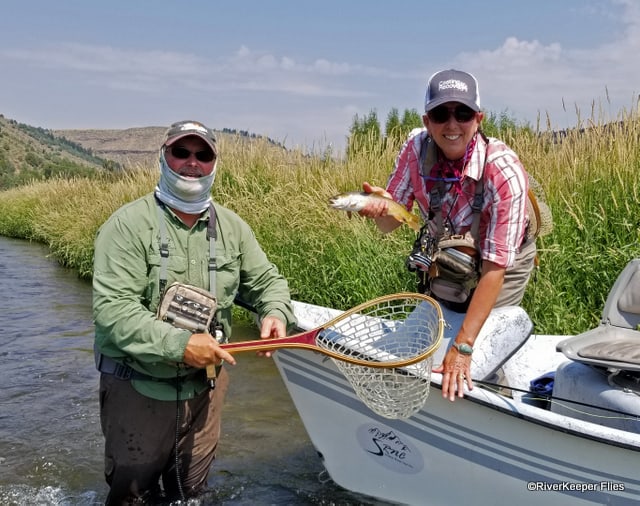
Cutthroat and Brown trout came to our net all day. Many were of smaller size, but these beautiful fish took flies willingly.
Other effective flies for use were Yellow Sallies and Purple Haze. There was a Purple Haze hatch late in the day…OK, Purple Haze isn’t really an insect, but I’ve written about how effective the color purple is. Trout seem to love flies with purple. Bigger fish started rising in the evening and the Purple Haze was very effective.
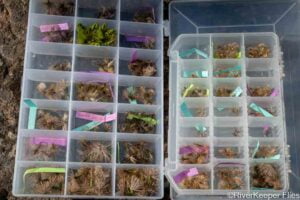
(I better tie a few more Purple Haze as the provider box is a little low.)
We had a good day catching beautiful Cutthroat trout. They willingly take dry flies and I’ll have to plan on returning.
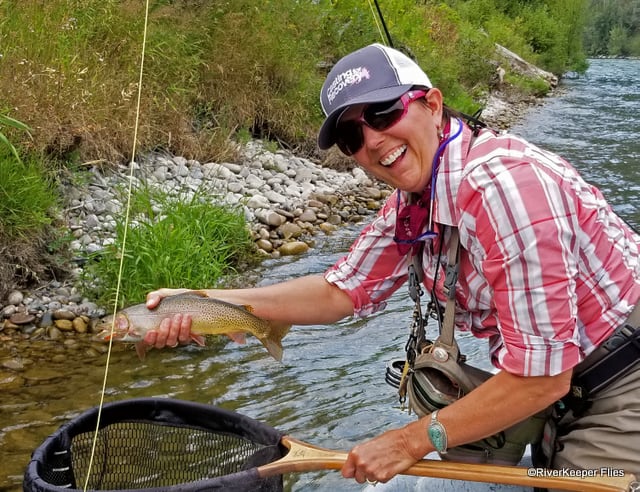
The next day we decided to walk and wade the Teton River. What a beautiful river with the clear water and canyons.


The Teton River drains the Teton Valley and flows into the Henry’s Fork of the Snake River north of Rexburg, ID.
What a difference from fishing the South Fork of the Snake. We fished classic pocket water all day long, walking and wading from one hole to another.

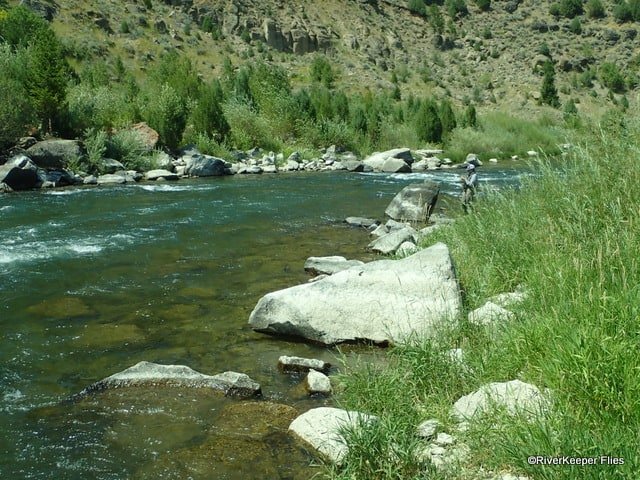
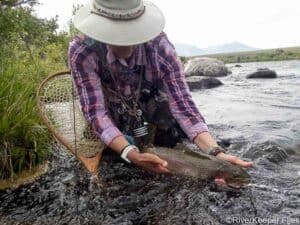
These Cutthroat looked much different than those on the South Fork. We were told they had many more spots. I was lucky and caught several of these fish and they are beautiful.
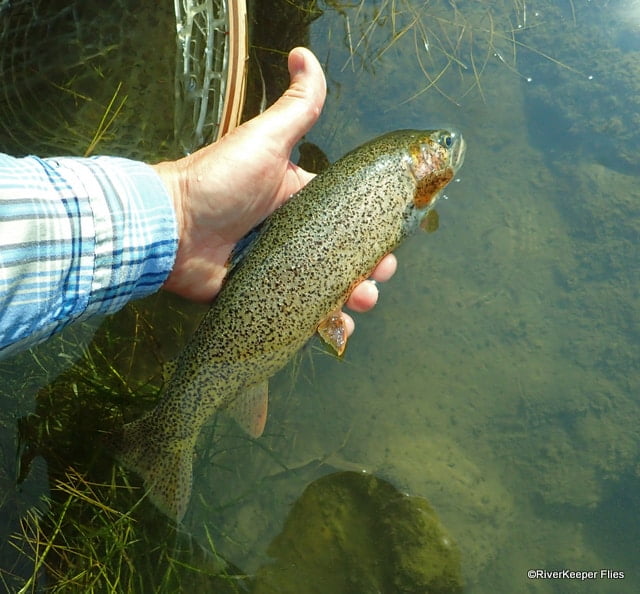
As I handled one of these fish to release it, I felt all the spots. It seemed very odd to be able feel the spots. I had to wonder if it might be a disease creating them.
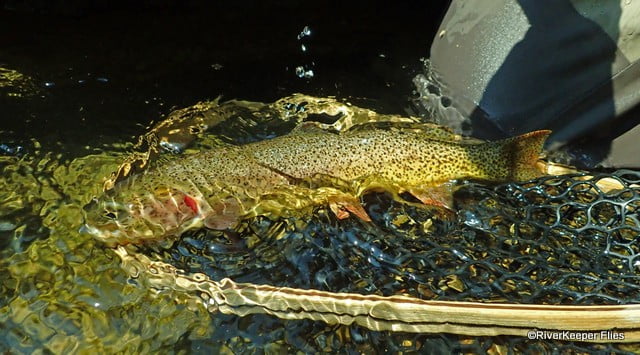
Effective flies were Beetle Betty, Galloup’s Ant Acid, Purple Haze, and a small yellow Stimulator.
What a great time we had fishing the South Fork of the Snake and Teton rivers.
Next stop is the Madison River valley. It will be the subject of next week’s post, so stay tuned.
Enjoy…go fish!
Update 8/23/18 – One of my RiverKeeper Flies readers provided the following information about the “black spots” the cutthroat have on their bodies. Here is the information he submitted from Keith Johnson, Fish Health Supervisor.
“There has never been any negative growth effect to the fish and it just seems to produce a slightly raised area if viewed by reflective light.
Digenetic trematodes have a three host life cycle involving an infected snail which produces a cercaria stage which actively seeks out the fish host. The cercaria attaches and penetrates the skin to lodge beneath the skin of the trout. The black spot becomes visible due to the migration of the melanophores after about three weeks and persists for a long time until the fish is eaten by a fish-eating bird. The metacercaria is released by digestion and the trematode resides in the upper intestine of the bird becoming sexually mature and produces eggs that are defecated into the water. These eggs hatch and seek out the snail host. The snail host then completes the life cycle. Classification of these parasites is done with the adult form so the general tern Neascus (family Diplostomatidae) is about as descriptive as you could do without infecting a bird to get the adult. Great blue herons are typically the definitive host.”
Thanks Russ!


How bad were the rattlesnakes?
Hi John,
I used to live in Victor, ID as well as Jackson for a few years and fished the Teton a bunch. We called that stuff on the fish “the ick” and I was told it was some kind of bacteria/fungus related to agriculture upstream from the canyon, in the valley. The fish always seemed healthy down there despite it.
Big fan of the blog, thanks.
Ed
Beautiful river and fish pics!! Keep up the good work Riverkeeper!
Hi John,
I lived in both Victor, ID and over “the hill” in Jackson for a few years and fished the Teton a bunch. We used to call the black spots on the trout down there in the teton canyon “the ick”. I was told it was some sort of disease/parasite/bacteria related to agriculture upstream in the valley. Despite the “ick”, those fish generally seemed pretty healthy.
Big fan of the blog, keep up the good work.
Ed
Awesome views. That place just went onto my bucket list.