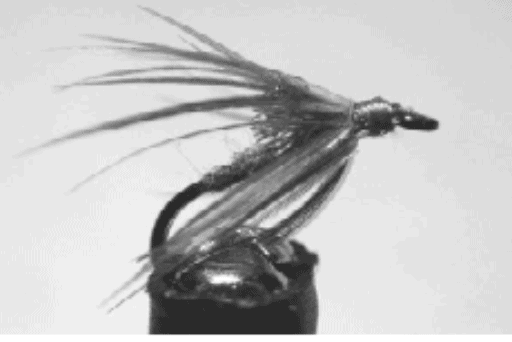
This week’s Throw Back Thursday Fly is the LaFontaine Drowned Trico.
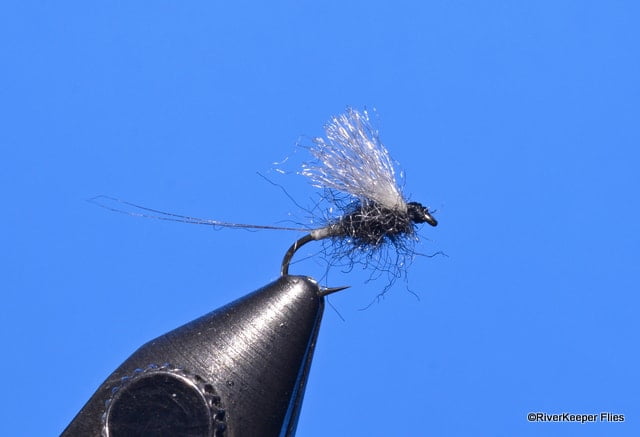
The LaFontaine Drowned Trico imitates the insect after laying her eggs and falling to the water. They eventually sink and are easy prey for selective fish.
For complete tying instructions how to tie the fly, be sure to pick up a copy of LaFontaine’s Legacy. Just follow the link below.
I’ve known of Al and Gretchen for several years and they are truly masters at the vise! In fact, Al is the 1999 recipient of the FFI Buz Buszek Fly Tying Award, an honor for any fly tyer! In addition, both were awarded the Lifetime Achievement Award in 2013 from Fly Tyer magazine.
In 2016 while I was attending the Western Idaho Fly Fishing Expo, Al offered to provide a fly for my Throw Back Thursday Fly post. I took him up on it and the Lady Heather Double Wing was published in March of that year.
At this year’s Western Idaho Fly Fishing Expo, Al offered to give me a box of flies he and Gretchen tied for their LaFontaine’s Legacy book. I couldn’t believe it. I said “thanks for trusting me with these. I’ll be sure to publish them in future RiverKeeper Flies TBT posts.”
And here it is.
This is a brief quote I used in the Lady Heather Double Wing post:
“Gary LaFontaine became world famous for his innovative trout fly patterns. But his life was cut short when he died of ALS in 2002. His final designs, however, were left in the caring hands of friend, author, and professional tyer Al Beatty, who proceeded to tie and photograph LaFontaine’s final set of undocumented patterns to create this book. Here are full-color photos and instructions on how to tie each of LaFontaine’s last designs, showing each step in detail. This is a beautiful book, essential to every fly tyer, that is also a loving tribute to an innovative sportsman.”
If you’d like to purchase their book, it will provide more background for each of the 26 listed flies, along with the fly pattern sheet and tying directions.
Other LaFontaine featured flies include the Lady Heather Double Wing, Bead Head Marabou Worm, Flex Sculpin, EZ2C Caddis, EZ2C Mayfly, EZ2C Midge, Enchanted Prince, EZ2C Stonefly, Fluttering Stone, Antron Bi-Visible, and the Drunken Sailor. You’ll see more of Gary LaFontaine’s flies in the near future.
Enjoy…go fish!