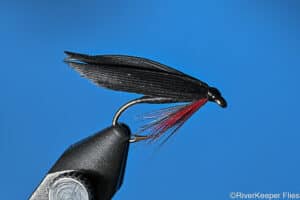
Have you ever waited with anticipation for a hatch to begin and see the first few Mayflies or Salmonflies float down the river without a fish eating it? If I were an aquatic insect, I’d choose to be one of the first bugs to hatch. Why do you ask? Because I’d have a greater likelihood of surviving the first minute of life! I can’t prove it, but I believe early hatching insects live longer.

I look forward to the Green Drake hatch on my local waters with great anticipation. I’ve seen the first Drakes in mid-May, but fish don’t begin eating them with regularity for several weeks. It’s the same for Salmonflies and Golden Stones. You’ll watch them float forever through water you know hold fish, but not one rises to eat them.
Fall Drakes and Flav, are just around the corner. I saw a couple of “scouts” last week and it won’t be long before more hatch and fish regularly rise for these large flies.
This isn’t an original thought on my part. I was reading one of the Old Fly Fishing and Fly Tying books listed in the OTHER RESOURCES section on my homepage. It’s a free download – North Country Flies (1886) by T. E. Pritt.
“Most anglers are familiar with the fact that trout will not take, off hand, every natural insect which comes floating along the surface of the river. The fish require to familiarize themselves with its appearance and satisfy themselves thoroughly as to its flavour before they begin to take it greedily. The stone-fly, for instance, is allowed to sail away unnoticed for a week or so after it comes on before trout appear to awake to the fact that there is a feast afloat above them, after which they all with one consent begin to make gluttons of themselves : similarly the dark watchet (the iron-blue dun) sails jauntily away, untouched, or, perhaps, picked up by the swallows, until his appearance and flavour are accepted as good. Against these facts the hackled fly appears as an imitation of an atom with the size, colour and imperfect shape of which the fish have for some time been familiar, as the half-hatched flies became their victims.”
Did you notice the published date of 1886? The book was written 136 years ago!
It turns out I’m not the first person to observe this phenomenon.
Don’t forget about the prolific Pale Morning Dun (PMD) hatches. Here are a few PMDs I’ve photographed floating on the water, floating long distances at the beginning of a hatch without a fish rising to eat them.

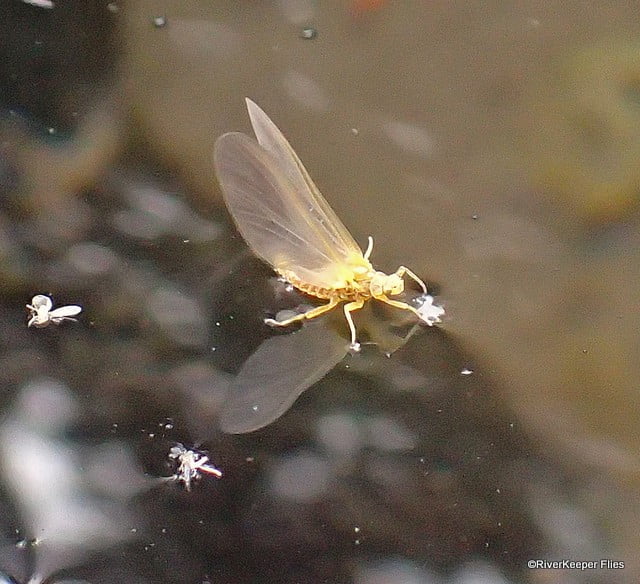

But Green Drakes are my favorite Mayfly. That’s why I’d like to come back as an EARLY hatching Green Drake.

Enjoy…go fish!