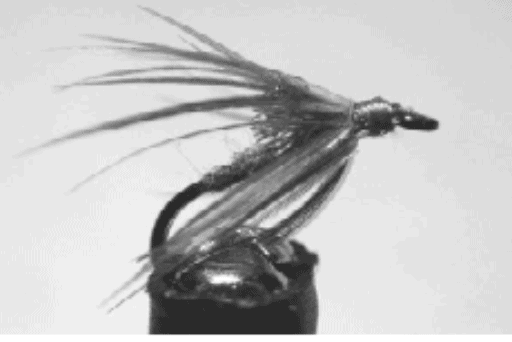
This week’s Throw Back Thursday Fly is the Thorax Dun.
I found this fly while paging through Vince Marinaro’s book In the Ring of the Rise (1976).
Vincent Marinaro (1911-1986) was born in Reynoldsville, PA. He started fly fishing during his high school years in the area’s local waters.
In later years, he lived in Mechanicsburg, close to his home waters of the Letort River. I read where was a corporate tax specialist, a classically trained violinist and the master of 11 languages.
Not only did he tie flies, but he also built bamboo fly rods. In addition, he was an author of numerous articles for fishing and outdoor magazines of the time.
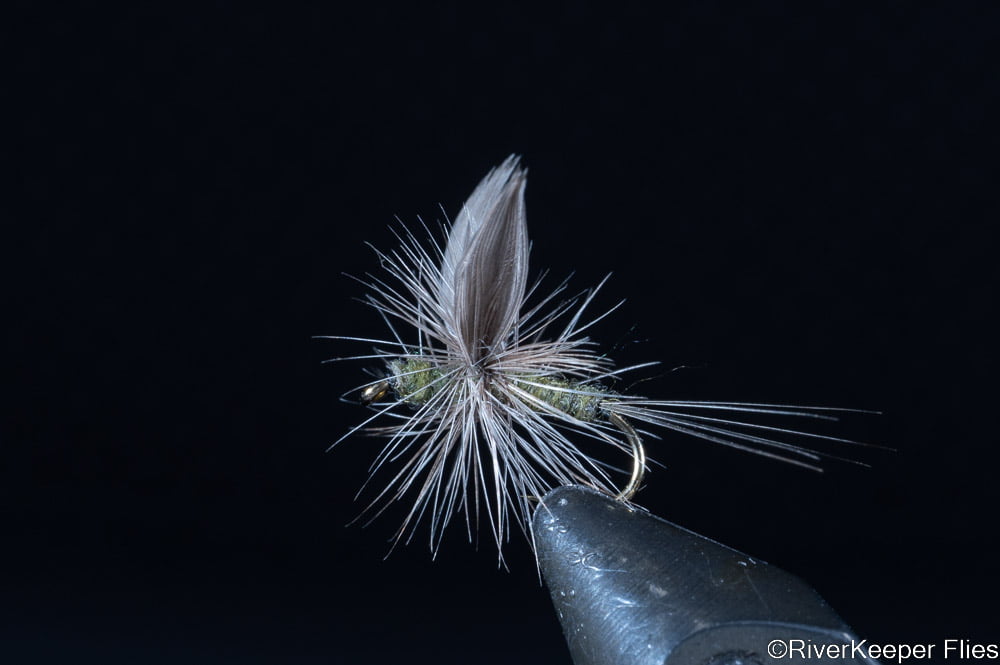
The Thorax Dun is a perfect representation of his belief that imitating the mayfly wing was central to fooling trout, namely height, breadth, and flatness. In fact, he wrote that as the fly enters a trout’s feeding window, the wing is most prominent and fish key on that attribute.
Marinaro used a unique crisscross method of hackle wound between the wings to create. I tied a couple of these flies and the technique is quite difficult to do properly.
The other notable aspect of the fly is the wing. Notice the wing is close to the middle of the hook shank. In addition, while it is difficult to see, the longer portion of the wing point is towards the back of the fly. Marinaro believed tying the wing in this direction adds to its durability because the grain of the individual fibers are pushed together by the wind.
Here is the first fly I tied. A key characteristic is placement of the wing, which I tied to far forward in this example.
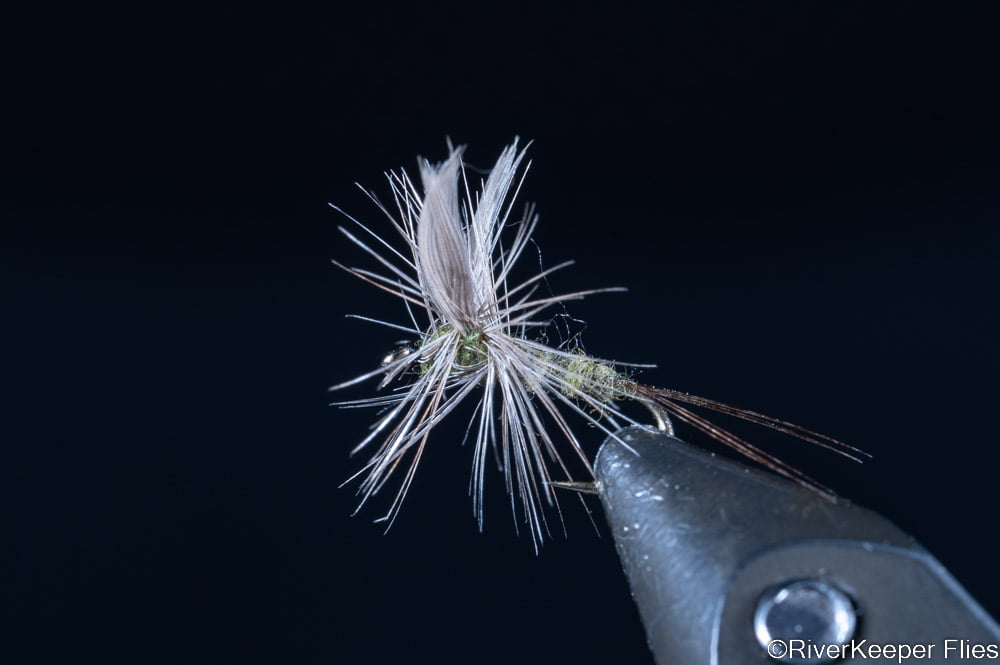
But the hackle is better, and this image provides a close-up of the hackling process. The hackle is tied in behind the wings and wound forward between the wings to the far side, under the body and repeated two more times. Then the hackle is reversed and wound through the wings in the opposite direction using two turns. It looks like an “X” between the hackle wings and around the body.
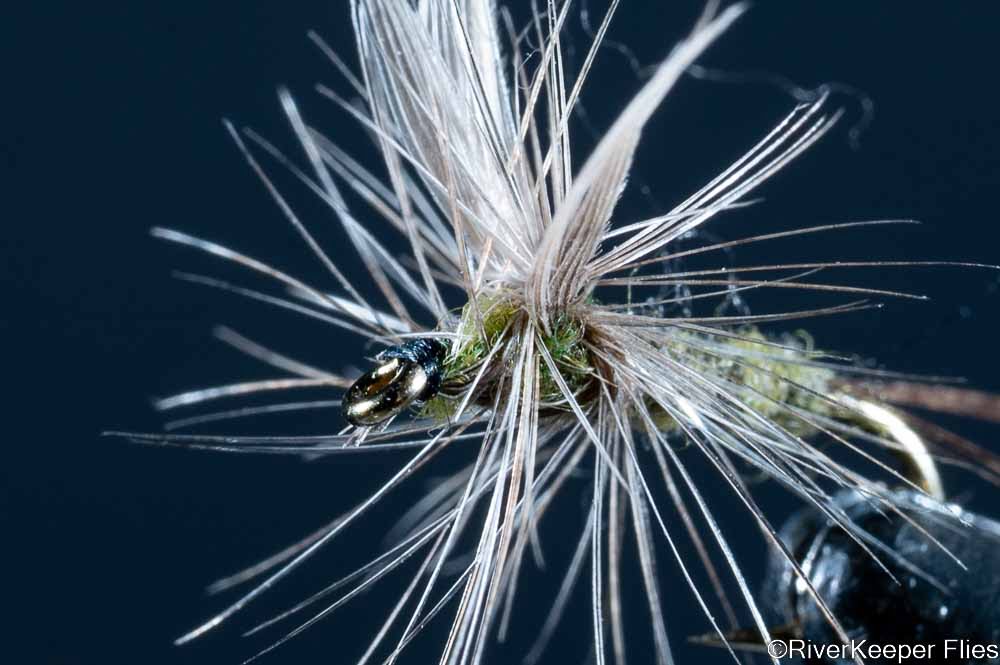
It’s complicated and not easy to do, at least for me. I might try again this winter to see if I can produce a better example, and work on my upright wings! The first image was better, but I used one too many turns of hackle.
I used starling as wing material, which was mentioned in his book. The fly was tied on a size 16 standard dry fly hook.
I should find Vince Marinaro’s book A Modern Dry-Fly Code (first published in 1950 and second edition in 1970) where I’ve heard he has detailed instructions of how to tie the fly.
I need a little practice!
To learn more about Marinaro, I encourage you to pick up a copy of Mike Valla’s book The Founding Flies (2013) a wonderful source about our fly fishing and fly tying history. Check out Chapter 29 in Valla’s book.


Enjoy…go fish!
(John Kreft is a participant in the Amazon Services LLC Associates Program, an affiliate advertising program designed to provide a means for sites to earn advertising fees by advertising and linking to amazon.com.)


The hen neck wing was a staple for the fly fisher’s (women and men) of the early part of the previous century and, as they were my teachers, remains so for my favorite early season mayflies. They are often a one trout fly but all trout respond to them, sooner or later and the feathered fly looks grand floating on waters, monetarily undisturbed by trout (IMHO).
Another great tie, John. Thanks for these memories.
Robert