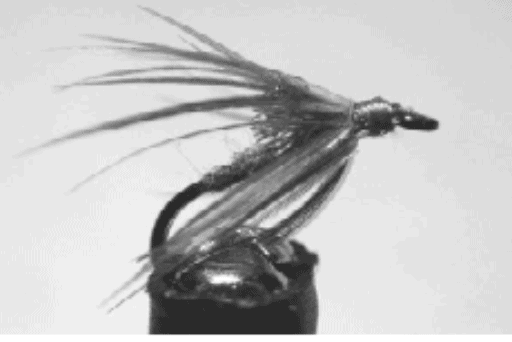
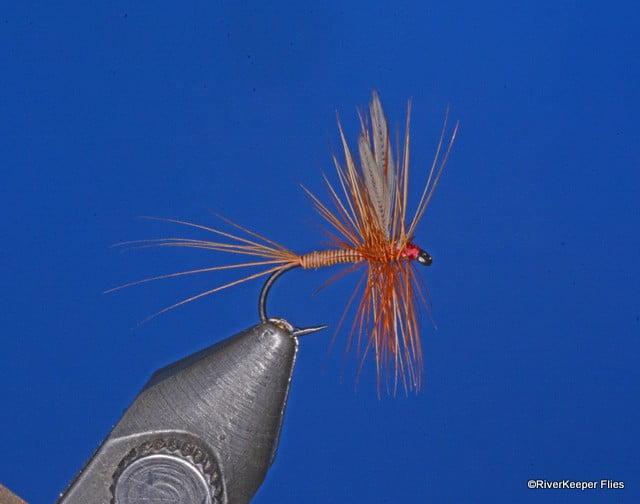
This week’s Throw Back Thursday Fly is Lunn’s Particular.
William J. Lunn was the river keeper for the Houghton Club’s fifteen mile stretch of the river Test in England from 1887 through 1931, a total of 45 years.
Lunn is credited with the first representation of the Rusty Spinner. The fly design incorporates a key component of the real fly – a slender, segmented body.
Lunn’s Particular was developed in the spring of 1917, which makes this fly 100 years old!
John Waller Hills wrote about the life of William Lunn in his book entitled River Keeper: the Life of William James Lunn (1934 – 1st edition). Abebooks.com provides more information about Hills book as follows:
“This book contains his views on chalkstream management, weed-cutting, restocking with mayfly, trout hatching etc., as well as his approach to fishing and his fly dressings, including the famous Lunn’s Particular.”
Hills writes in his River Keeper book about how the Lunn’s Particular name came about:
“Mr. Gilbey was fishing Park Stream. He had fared badly, and not even the famous extractor could do its business. He turned to Lunn and said, “The trout are too particular today.” So Lunn pulled out his new fly and asked him to try it. He did so, caught three fish, and then the short spring rise was over. “Why, what’s this fly?” said Mr. Gilbey. It’s a Lunn’s Particular.”
Here is the fly pattern as described by Lunn’s Flies website:
Hackle, medium Rhode Island cock hackle.
Wing, two medium blue cock hackle-points put on flat.
Tail, four fibres of Rhode Island from large hackle.
Body, undyed hackle of Rhode Island cock hackle.
Tying silk, Pearsall’s gossamer, shade 13 – crimson.
Hook, o (size 15).
Enjoy…go fish!




John – do you also tie the wings in a spent position as the pattern sheet above calls for? In the pic, they are upright and is the wing position that crucial in your experience with this fly?
Jim
Thanks for your comment about Lunn’s Particular. I haven’t fished this fly…only tied 1 for the picture so I could present it for the TBT. I would pull the hackle tips flat if I did fish it.
John