Poxyback Baetis

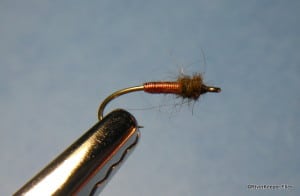
This week’s Throw Back Thursday Fly is the Poxyback Baetis.

Poxyback Baetis | www.johnkreft.com

This is an older fly pattern I found in Randall Kaufmann’s book Tying Nymphs (1994). Kaufmann’s book, along with his Tying Dry Flies, was one of the first color fly tying books I purchased.

Tying Nymphs taught me new techniques, materials, and flies to tie.

The Poxyback fly series were designed by Mike Mercer from Redding, CA and included PMDs, Callibaetis, Green Drakes. A drop of epoxy was used on top of the thorax to simulate one of the “trigger features” that make fish respond to take a natural. Just before hatching, the real bugs develop a shiny, distended wingcase. Mercer determined a drop of epoxy would replicate the wingcase.

This fly was tied on a Tiemco 200 #18 hook. I used UV resin instead of epoxy. It’s much simpler than mixing and waiting for the epoxy to set.

Enjoy…go fish!

Similar Posts

  • Ugly Rudamus

    This week’s Throw Back Thursday Fly is the Ugly Rudamus. The Ugly Rudamus was developed in 1984 by John Foust of Hamilton, MT as an imitation for caddis and stoneflies. Born in Stevensville and raised in Darby in the 1960s, Foust began tying flies at the age of 13 and sold them at Bob Ward’s…

  • What Hatches to Expect

    I’ve been on the Big Island of Hawaii and will head home this week. It has been a while since I fly fished and decided to look at pictures I took of insects over the past three years to prepare myself for what hatches to expect when I return. What I found were lots of…

  • Green Drake Hairwing Dun

    This week’s Throw Back Thursday Fly is the Green Drake Hairwing Dun. The fly was created by Rene Harrop in the 1980’s. In fact, I found a Fly Fisherman magazine article Rene wrote explaining how he developed the Hairwing Dun. Looks like the fly was born in Rene’s mind as he fished the Firehole River. Evidently,…

  • Lindgren’s Peacock

    This week’s Throw Back Thursday Fly is Lindgren’s Peacock. This fly was developed by Ira Lindgren. The first TBT fly I posted from Ira was the Lingrens Olive. However, I’ve since learned the name was misspelled in the book I used as a reference.

Leave a Reply

Your email address will not be published. Required fields are marked *