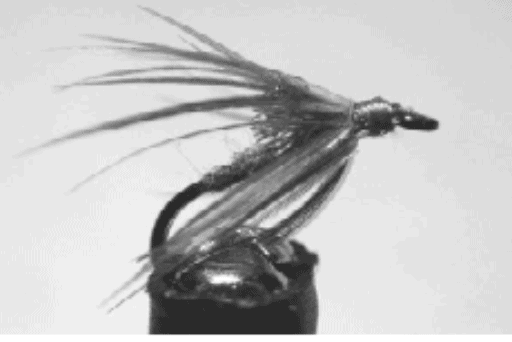
I haven’t tied any trout flies in the last week because I’m still working on spey flies. Specifically, the Green Butt Skunk Spey.

The two flies on the book Steelhead Flies by John Shewey are the first (left side) and third (right side) I’ve tied. You’ll find this fly on page 193 of John’s book.
I asked for and received some feedback from a couple of fly tying friends of mine and I’m incorporating their comments into the next few flies coming off my vise.
“As a fishing fly it is great! It is still pretty good for the wall. Being real critical…”
- Hackles flow nice, but appear heavy. Like to see flowing hackle on a display fly
- Hackles should flow rearward and if a collar is present, the hackle should flow past the hook point or even the bend of the hook.
- Would like to see more of the body on a display fly.
- As a guide, use 5 turns of tinsel followed by 5 turns of hackle.
- 1 or 2 turns of body hackle
- 2 or 3 turns of collar hackle
- Using long fibered blue-eared pheasant, heron, or spey hackles will allow the body to show more. Schlappen body hackles or marabou can be used, but have a tendency to hide the body.
- The tail should appear more compact for a plate fly without any fibers splaying out.
- The chartreuse butt should be level or slightly tapered toward the body.
- The married wings should be of equal length with tips married together.
It can be humbling to ask a respected fly tyer to take a look at your flies and give you critical feedback. But it you are serious about improving your fly tying, it’s a step worth considering.
Well, I’ve got a ways to go for display flies. Fishing flies? Yup. Swing one of these in front of a steelhead and … BAM!
I’m working specifically on:
- Mounting the tail without splaying the golden pheasant topping fibers.
- I’ll continue to mount the tinsel ribbing materials with long tags so not to create little bumps at the tie-in, tie-off points.
- Selecting the proper materials, particularly goose shoulder feathers. I’ve never tied with goose before. I found most of the feathers I have to choose from have slightly feathered tips, which aren’t good for married wings. The tips are difficult to stay married together. The proper materials are critical.
- Two-strand wool yarn vs. floss for the fly’s butt section.
- Don’t forget that proportions are very important for mounted flies.
Here is a close-up of the third fly…the one on the right from above.

I like this fly better, but I need to tie a few more of these.
As I mentioned above, material selection is critical. I’ve learned that over and over from tying trout flies. Spey flies are no different.
I gotta get back to the vise and practice some more.
The good thing is most of the time, fish don’t care. But I do…
Enjoy…go fish!


Congratulations..your list of fixes is shorter than mine. I am working on the 3rd try today.