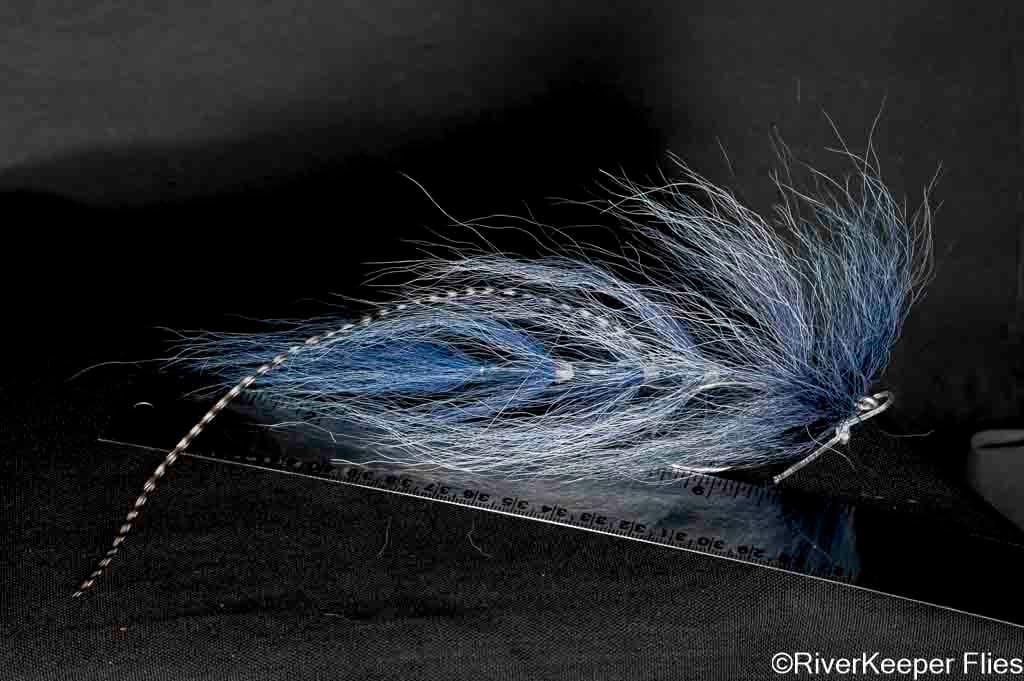
I’ve taken on a new fly tying project to tie flies for a customer who plans to use them for catching giant trevally and marlin. He dropped off a BEAST Fleye (created by Bob Popovics) tied only with bucktail and a few long hackles attached. I thought you might enjoy my journey tying a BEAST Fleye.
I receive occasional requests from fly fishers to tie a fly pattern they can’t seem to find anywhere. Evidently, my name pops up when they complete a Google search for “custom fly tying”. Many times I say I’ll give it a try, but I’ve turned down attempting bass bugs and jigs.
So why did I say yes to an 8/0 fly measuring 8 inches long?
I’m not sure myself. I looked at the fly and it piqued my interest.
This is a style I haven’t seen before because I don’t tie a lot of streamers. It’s a lot different than the size 16 Sparkle Dun PMD I tied recently!
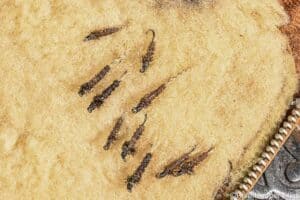
The length is achieved by using a mono extension which is attached to the hook shank. Here is a closeup of the mono extension body from the sample fly my customer provided.
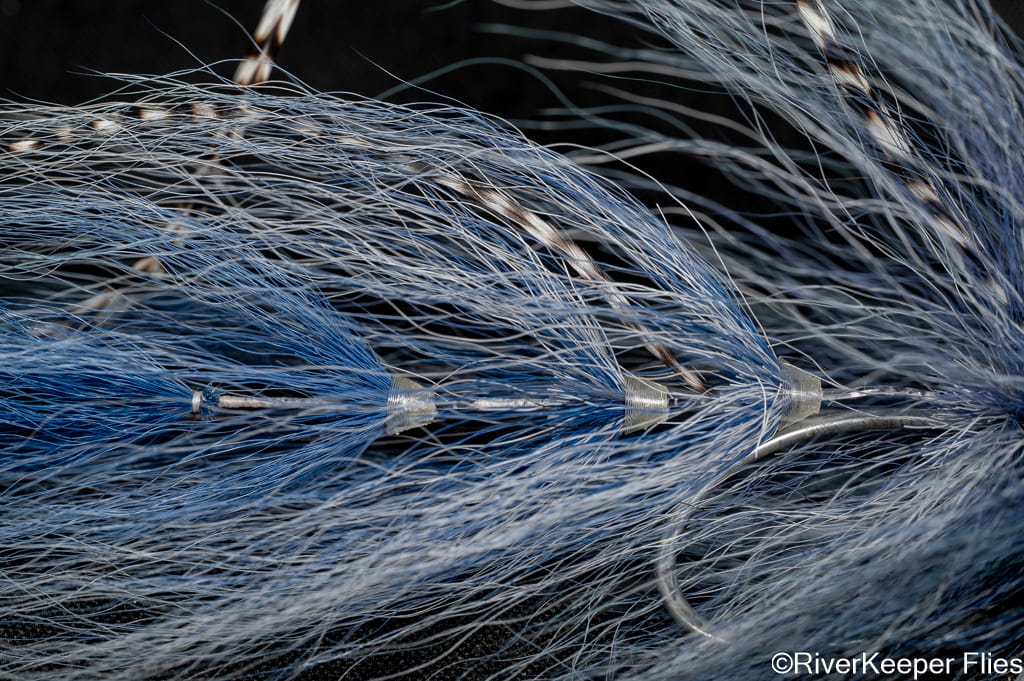
The spacing between bucktail tie in point was either 3/4″ or an one inch apart.
I decided to sketch the fly to better understand how it was created.
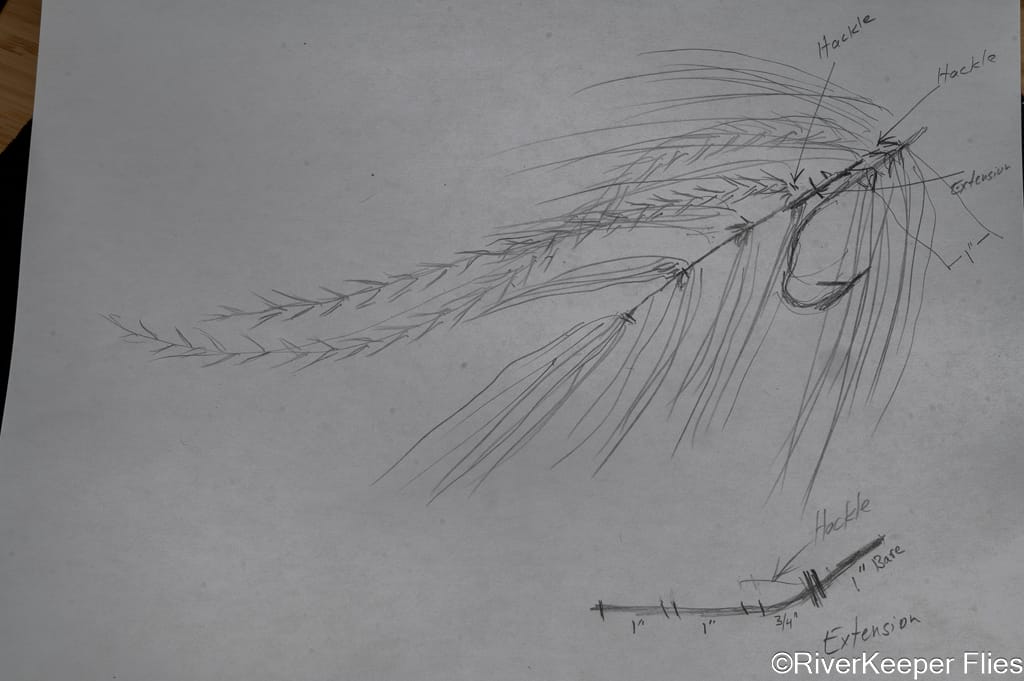
UPDATED – This is the second schematic I used to tie the final customer flies. It helped with consistency between the streamers.

I also started watching YouTube videos about how to tie the fly. My customer shared this video of a fly tyer in South Africa.
Other videos showed up in my feed and I spent a few hours watching several Gunner Brammer videos. I’ve watched a few of his streamer videos in the past, but didn’t pay much attention to the hollow style of fly. Here is one that helped me:
I must say, Gunner is a talented fly tyer and an excellent instructor. I finally took the plunge and sat down at the vise and began to tie.
The first step was to create some straight mono extensions. My customer dropped off 60 and 80 pound tippet material on spools. I cut notches is both ends of a piece of wood and wrapped the leader material around it. Pouring boiling water into a pan and soaking them for three minutes, removing the hot water and replacing with cold water changed the property of the leader and made the segments straight.
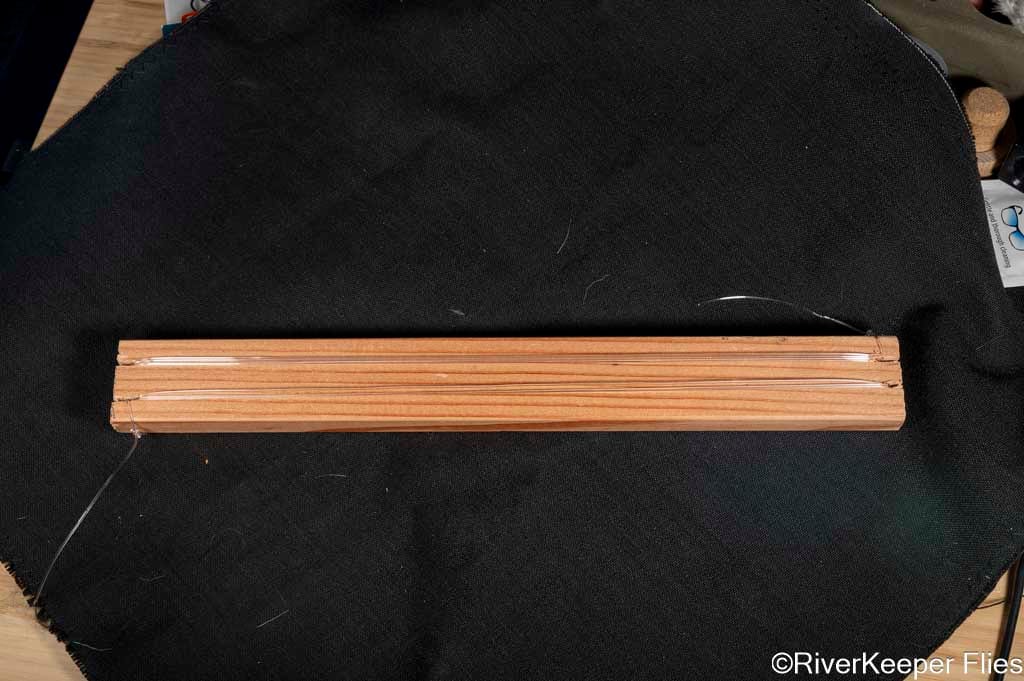
Bucktail is tied on the mono without a vise. Yes, you tie them “in hand”. Not something I’ve done before!
Here is a finished extension using 60 pound mono and 1/2 inch spacing. I decided to practice the technique and tie up a few Bull Trout flies with 1/0 hooks.
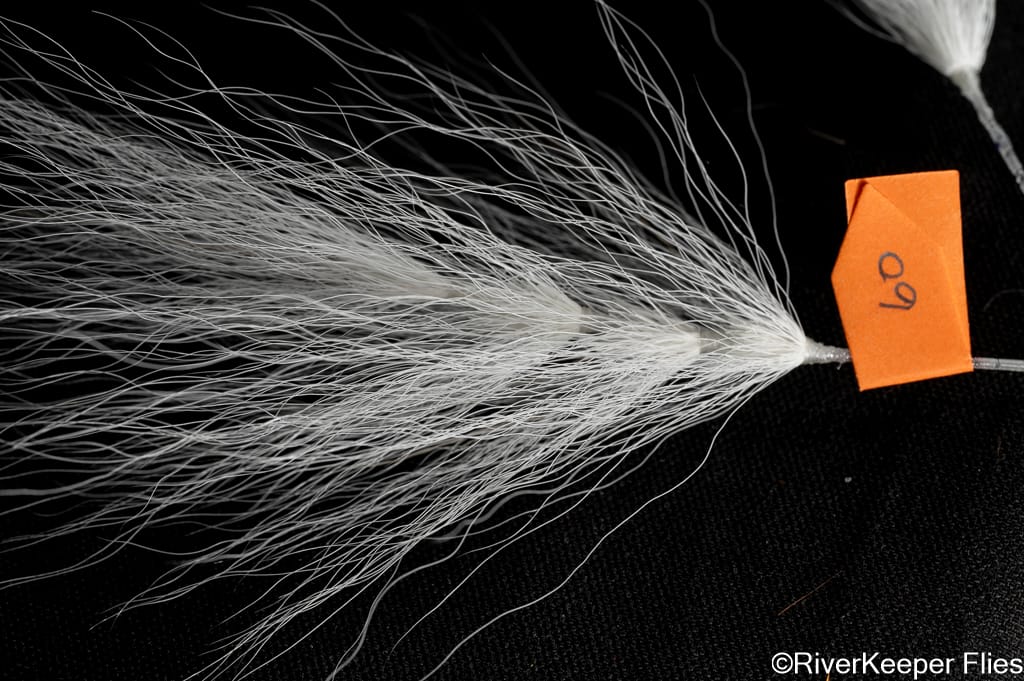
These extensions are then tied onto the hook and additional segments are tied using smaller spacing to create more bulk for the head. Here is a finished fly off the vise. Notice how the bucktail flares from the hook. Thread wraps control how much the hair flairs.
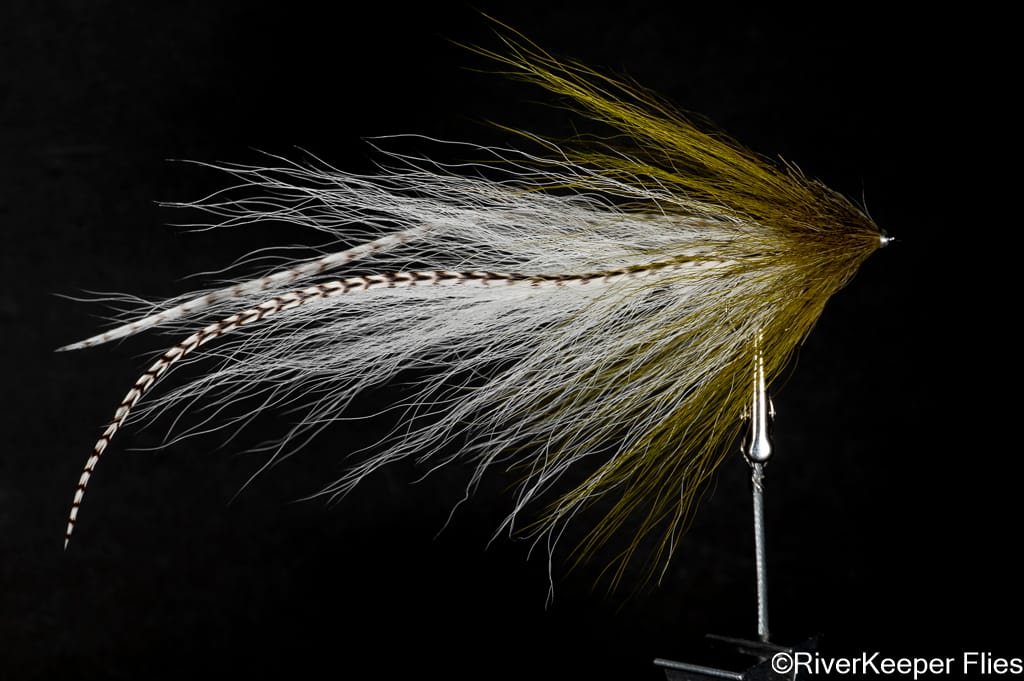
The last step is to soak the fly and allow it to dry. Notice how the shape has become more fish-like?
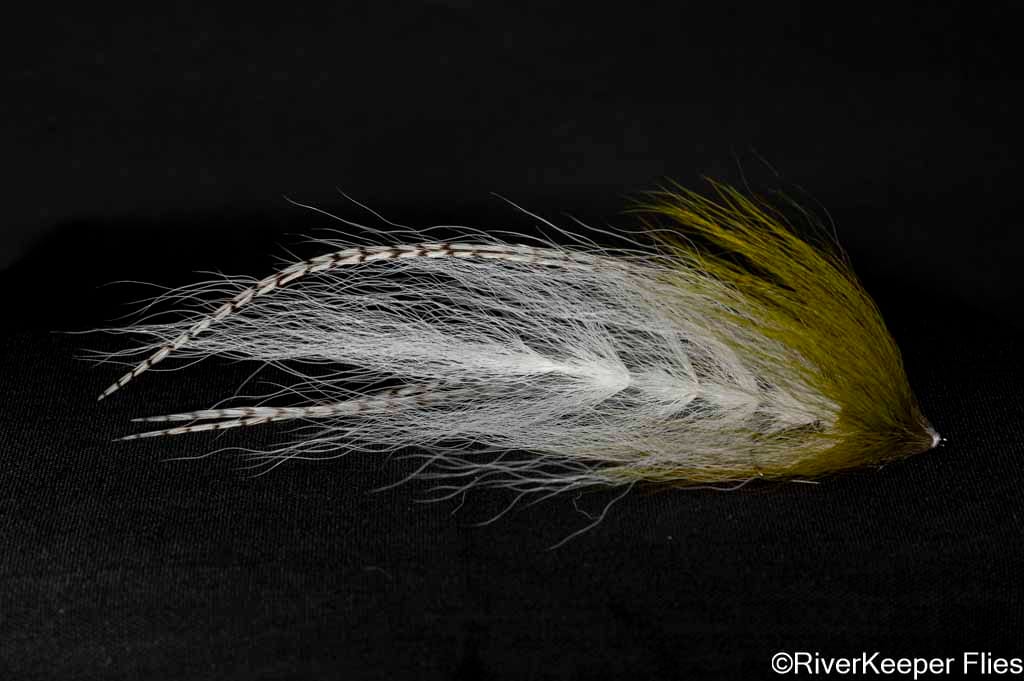
The image above is my third try tying Bob Popovics’ BEAST Fleye. It’s tied on a 1/0 hook and measures about 6 inches in length.
I took it for a swim today in my favorite river. I didn’t find any Bull Trout, but I like the way it moves in the water.
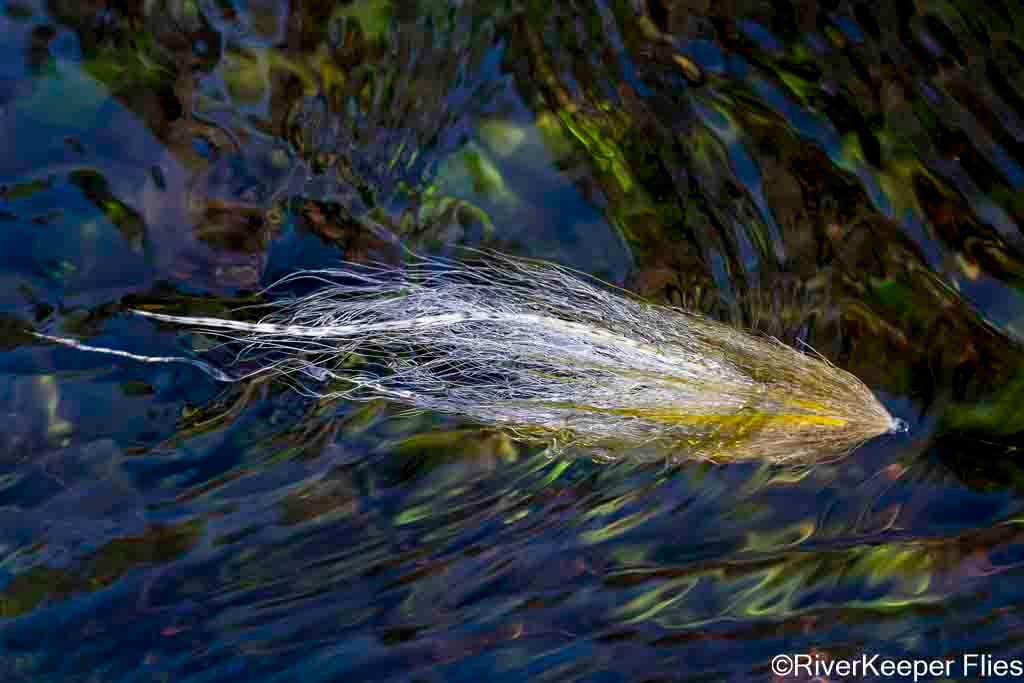
After reading this, you may ask why only use bucktail for the fly. Bob Popovics came up with the idea of using bucktail because it doesn’t soak up water and is MUCH easier to cast these large flies. By tying segments on mono, a tyer can make the fly as long as they want. How about a 12 inch streamer? No problem with this technique.
You’ll notice I added a few hackles to the fly. I’ll be experimenting with a little flash on future flies and share them with you.
Enjoy…go fish!



Great post! plastic cones on each section of the mono on the original fly help to set the angle of the bucktail and set the overall profile of the fly. They are the genius of a gentleman by the name of Rupert Harvey (a phenomenal UK tyer). He also sells them. Bob used wraps of mono to create the angle and profile of the Beast. Rupert’s cones speed up this process considerably.
Very cool to see your process-thanks for sharing!
That’ll hunt on the Metolius!
John,
What a great post! Tight Lines – Al Beatty