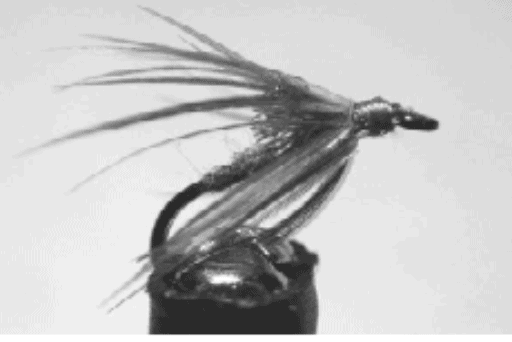
I’ve been tying flies for customer orders and thought I’d share a few flies I’ve been working on. A recent customer asked if I could tie some jumbo flies for his grayling fishing. I was intrigued.

The image above includes a “normal” size 14 soft hackle for comparison. I’ve used two feathers on each of the larger flies for the wings, as requested.
Before I explain my jumbo flies, let me digress a moment. I’m finally back to tying flies after completing some much-needed website actions.
You see a completely different website since I made the major update on February 23. This was the result of changing to the Kadence theme for WordPress. I really like the result of my front page. In fact, I changed the Favorite Images recently. Be sure to check them out in the gallery.
After changing my theme, I spent many hours going back over every single post to make sure the images and words looked like I wanted. It’s one of the reasons I waited so long. I won’t go into detail other than to say, whew…happy that’s finished.
Last week, I changed website providers to NameHero, taking advantage of faster loading speed for you. I can see the difference. Changing to the Kadence theme and NameHero hosting has substantially reduced the time for each page to load on your computer, phone, or tablet. I hope you have noticed the change.
For those who are reading this on their mobile device (42% of you), Kadence is a responsive theme, which automatically adjusts to the user’s screen size and results in much better viewing.
OK, enough of this…and back to the issue at hand.
I’m back to tying flies. Jumbo flies to be specific.
Jumbo flies? Hmmm….
Here is some of the email conversation we had to determine specifically what flies to tie.
“What did you have in mind?”, I asked.
Him: “Spider-type flies, Elk Hair Caddis, and a Mosquito tied on large hooks, like sizes 4 and 6.”
Me: “Why the large hooks?”
Him: “Grayling have small mouths and I spend a lot of time pulling the fly away from the smaller ones. I need larger flies to target the bigger ones.”
What a problem to have, right?
He provided a few sample pictures from the Internet of size 14 flies. “Could I make them larger? he asked.
I told him I’d give it a try.
The problem of super-sizing flies is finding the right materials. Elk hair is a perfect example. I use cow or yearling elk for the wings and the hair is only so long. Super-sizing a fly and keeping the proper proportions could be a problem.
So, my first step was to stare at my hook box to select the right one for a jumbo Elk Hair Caddis.

The image above compares a jumbo Elk Hair Caddis on a size 4 Mustad 94841 hook with a size 12 X Caddis.

Notice the thick hackle? It was another request. He asked for flies that were “very bushy”. I used two hackles wound at the same time to create this look.
After completing a few jumbo Elk Hair Caddis, I moved on to some soft hackle flies. These will all be size 6.

Again, the challenge is finding feathers long enough for several wraps and long fibers extending past the hook point.
I ended up using two partridge feathers for these flies.
The last fly I’ll tie is a jumbo Mosquito.
I had to think about up-sizing this fly. I’ve seen a couple options for bodies on a normal fly. Some are black thread with a light rib. Others use moose hair, a light and dark wound at the same time.
After a lot of thought, I decided to try a material called Life Flex in gold and brown.
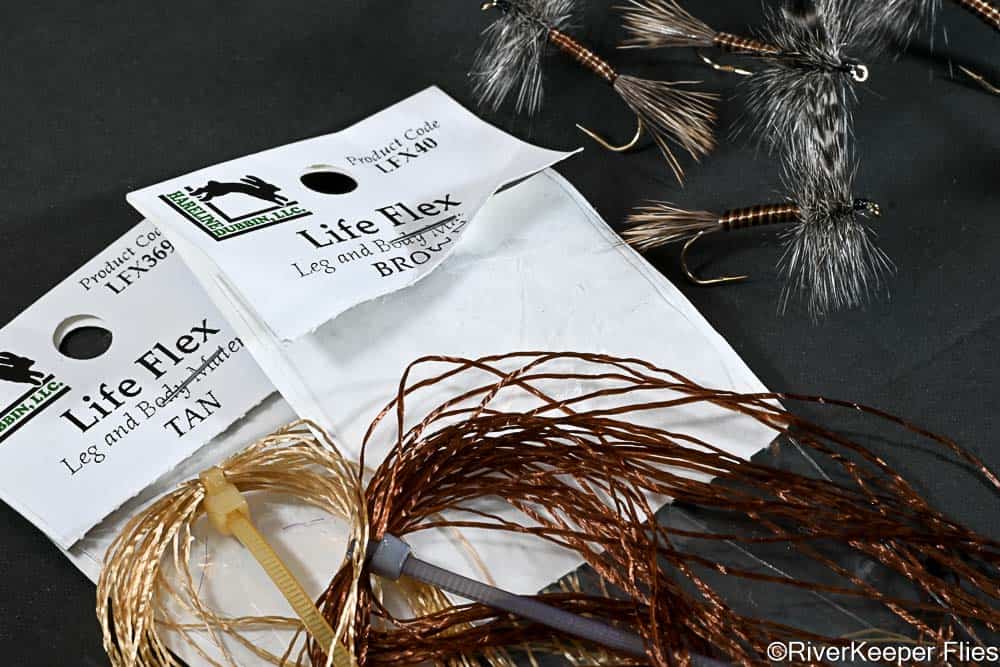
This is what the final fly looks like…my version of a jumbo Mosquito, tied on a size 6 hook.

I wonder how these will work? I hope to receive some feedback.
Enjoy…go fish, stay safe!



Great job John, i like the mixing of the body for the mosquito, i have been preaching this for a few years now, really a great material for the that puropose… jc
Thanks for the comment Jerry!
Those mosquitoes are fantastic looking. Wouldn’t work too well in Western New York except maybe during Steelhead season. Either way, great job and I hope your client hammers the big Grayling he is after.
Thanks!