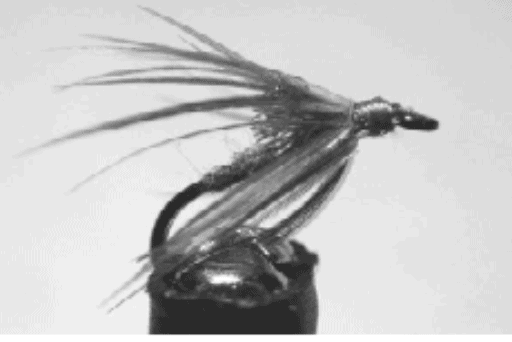
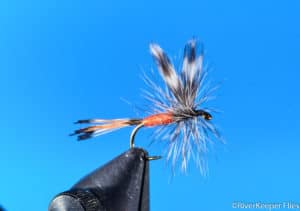
This week’s Throw Back Thursday Fly is Dr. William Baigent’s Brown.
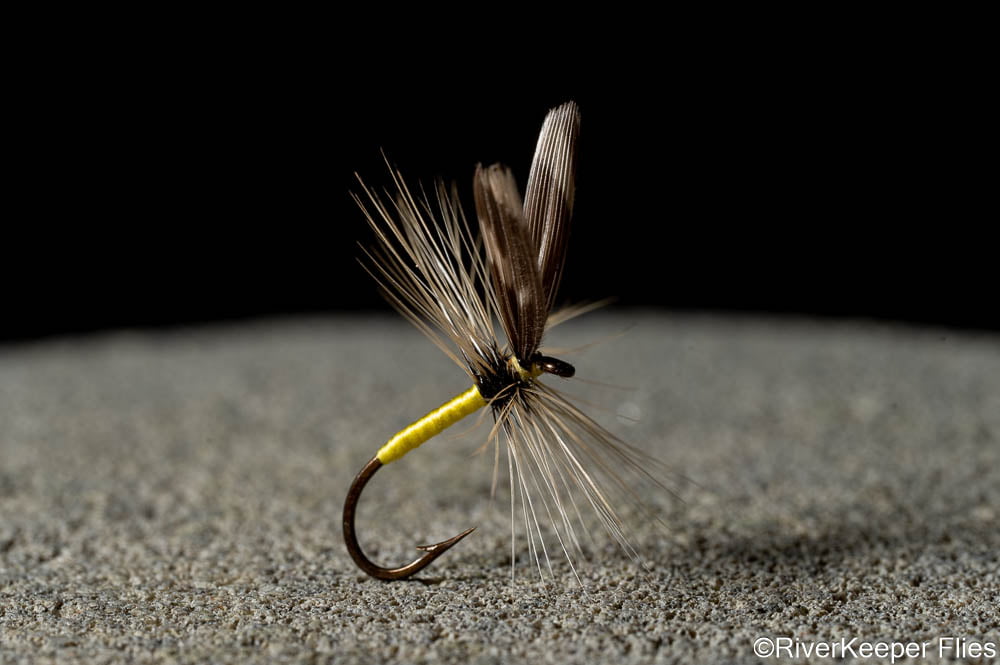
I found Baigent’s Brown recently and pulled out the materials to tie one.
Robert Smith, author of The North Country Fly: Yorkshire’s Soft Hackle Tradition (2015), writes his own blog entitled The Sliding Stream. I encourage you to check it out. Here is a link to his book, one of my favorites.
Dr. William Baigent, M.D., O.B.E. (1862-1935) was born in Darlington, England. He attended the University of Durham’s College of Medicine in Newcastle-upon-Tyne where he received his M.B. in 1885. Five years later Baigent obtained his M.D. He wrote his mother about receiving “the Gold Medal for being the most distinguished graduate of the year.”
He was in general practice at Northallerton in the North Riding of Yorkshire.
His niece Sheona Lodge, who went to live with him at the age of 2 years old, wrote an excellent article in the Spring 1976 issue of The American Fly Fisher, published by The Museum of American Fly Fishing. You can find the pdf version HERE.
In the article, she called him “father”. It’s a heart-felt piece I really encourage you to read where she recalls many of the things he taught her, including “think like a trout”.
He was urged to write a book about fly fishing and fly tying, but died before completing the work. His wife and several family friends helped to finish the book, entitled A Book on Hackles for Fly Dressing. It was a limited run of only 65 books, but included 11 cards with 164 hackles mounted on them. He numbered and named the capes and the feathers were used in the book, which was published after his death.
Lodge includes information about breeding his own Game Cocks for the feathers of his flies, trying to find the perfect hackle which included a firm, strong, clear, glassy, and transparent feather. He strived to find feathers which would “stimulate” a trout to rise when insects weren’t hatching. His Baigent Brown and variants were flies listed in the 1925 Hardy catalog.
In addition, he was the first fly fisher to advocate using two flies, spaced a couple feet apart.
Below are two excellent sources for more information about the man. The left side is a link to Smith’s “The Sliding Stream” blog post which is excellent. You’ll even find a image of Baigent’s book along with 2 cards of hackle.
The other link is from the Friends of Jesmond Old Cemetery describing his life.
It’s clear to me William Baigent was a special man and fly fisher. We all benefit from his love of our sport.
Baigent’s Brown
Hook:
Mustad 94840, size 10 – 12
Body:
Thick yellow floss
Wings:
Woodcock or hen pheasant, tied forward of hackle
Hackle:
Large furnace hackle
Enjoy…go fish!


Very nice pattern and interesting background story. Please explain what a whisk is as stated in the recipe.
Hey Martin – I’m not sure what the “whisk” is. I looked back at what I wrote for the fly pattern on the bottom of the post and didn’t see it.
John
Hi John,
Wow! What a great post. After more than 60 years in the fly fishing industry, we’re amazed how much we DON’T know about the sport. Reading your weekly posts is always a joy but this one was particularly great. Quite frankly, we had not heard of William Baigent until today. Our thanks to the Kreft family for helping a couple of aging fly fishers learn more about the sport and doing your part to ensure the history of that sport is not lost to time. Take care & …
Tight Lines – (Gretchen &) Al Beatty
Thanks for the Comment, Al. I hadn’t heard of him either. I read the links I provided and would have liked to meet him.
John