The last few days I’ve been tying a fly order which include some of my favorite flies. These are the same flies I tied and donated to the recent CfR auction and benefited the Casting for Recovery – Oregon South my wife leads. My customer was one of the bidders for the flies, but lost to the ultimate winner. He contacted me and asked if I could tie the same order for him. Sure, I said!
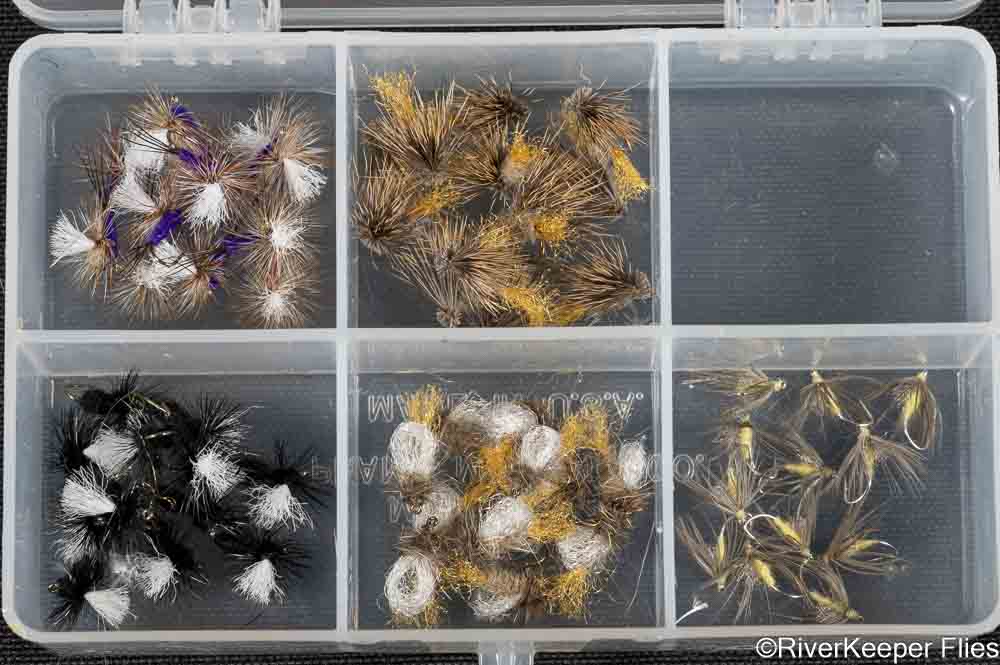
These happen to be some of my favorite flies I fish during the summer months on our fly fishing road trips. They are worthy candidates for your own fly box. The flies also fall into my “simple, but effective” category of fly tying. Master tying these flies and you’ll be surprised how many fish you’ll catch.
I’m providing images of the flies along with links to my RiverKeeper Flies YouTube channel for the fly tyers to share how I tie the flies.
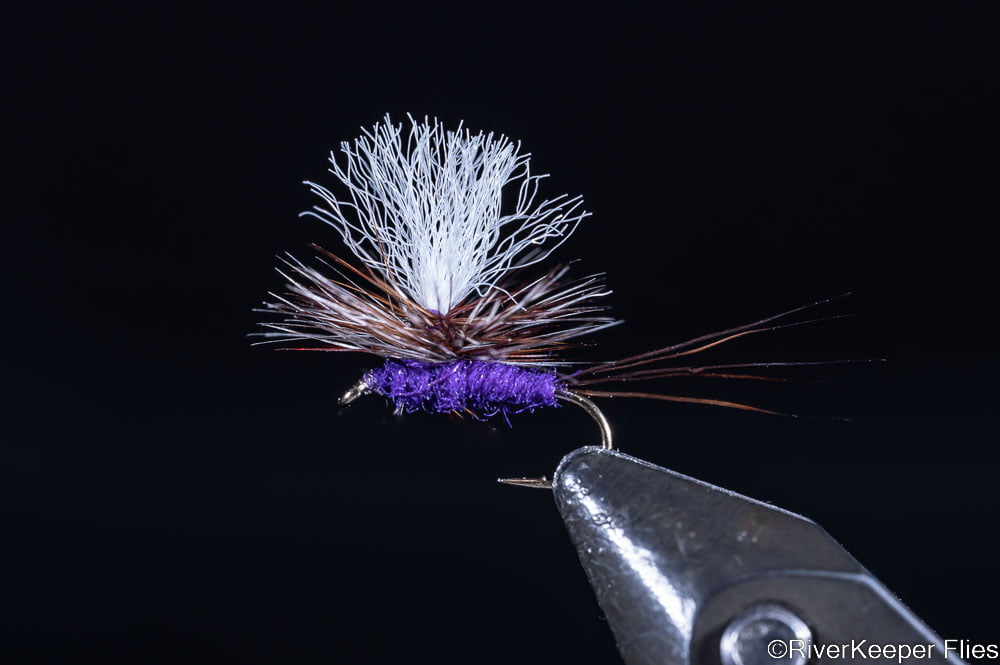
Purple Haze
This fly is a classic. Why do fish like the Purple Haze so much? I have no idea. All I know is it works and many fly fishers make sure they have several of these in their fly boxes. I have a good friend who fishes almost nothing but this fly…at least that’s what he tells me! We talk kiddingly about the “Purple Haze hatch”.
It’s a fly that is easy to see on the water with the white parachute post. I’ve always wondered if the fish mistake the purple color for a Rusty Spinner.
X Caddis
The X Caddis is my favorite fly for fishing the caddis hatch.
Here is what I wrote back in 2018 when I presented the fly in a Throw Back Thursday post:
“Their story in the book credits Craig’s wife Jackie as the one who had the original idea for the X Caddis. She thought the fish might like the shuck hanging off the back of a caddis much like that from their popular Sparkle Dun fly pattern. They were targeting large, selective fish on the Henry’s Fork river in Idaho who would “drive by” an Elk Hair Caddis and not eat the fly.”
The book reference was Fly Patterns of Yellowstone – volume two by Craig Mathews and John Juracek of Blue Ribbon Flies.
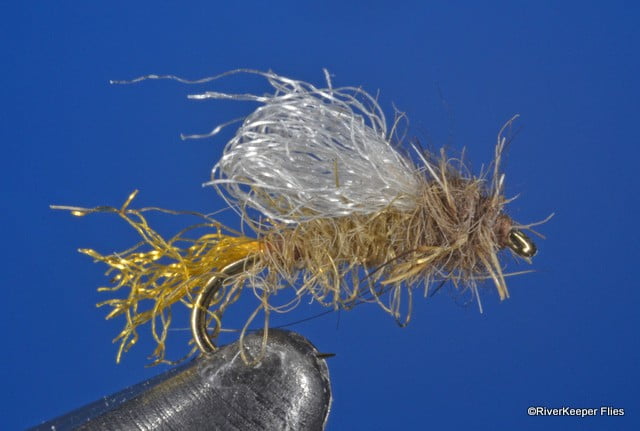
Iris Caddis
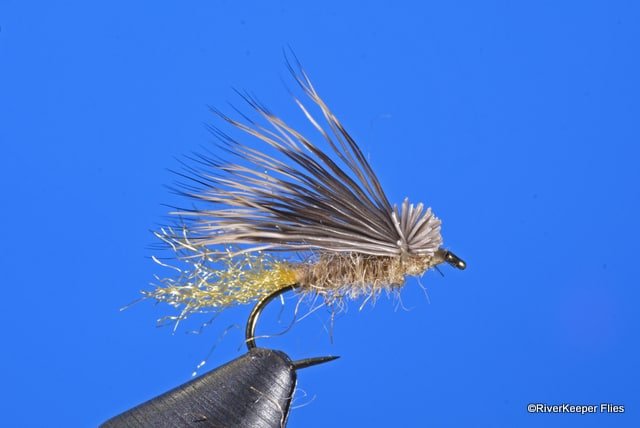
Another favorite caddis pattern is the Iris Caddis. For some reason, the white Zelon wing can be seen quite easily and the gold Zelon tail tells trout it isn’t about to fly away and is an easy meal.
The fly is effective when caddis are hatching. I wrote about the fly in a 2018 Throw Back Thursday post:
“It’s another fly pattern to imitate a stillborn caddis. A single stillborn Hydropsyche caddis they found in a Madison River back eddy in 1987 was the inspiration for this fly.”
Again, the book reference was Fly Patterns of Yellowstone – volume two by Craig Mathews and John Juracek of Blue Ribbon Flies.
Arrick’s Parachute Ant
This fly is a favorite terrestrial I use in Montana when we’re between hatches. The parachute post allows us to see the fly at long distances. I tie and fish the fly in sizes 14 and 16. This happens to be the black version of Arrick’s Parachute Ant, but I generally use the cinnamon color.
Now that I have several tied up, I plan to give them a try next summer!

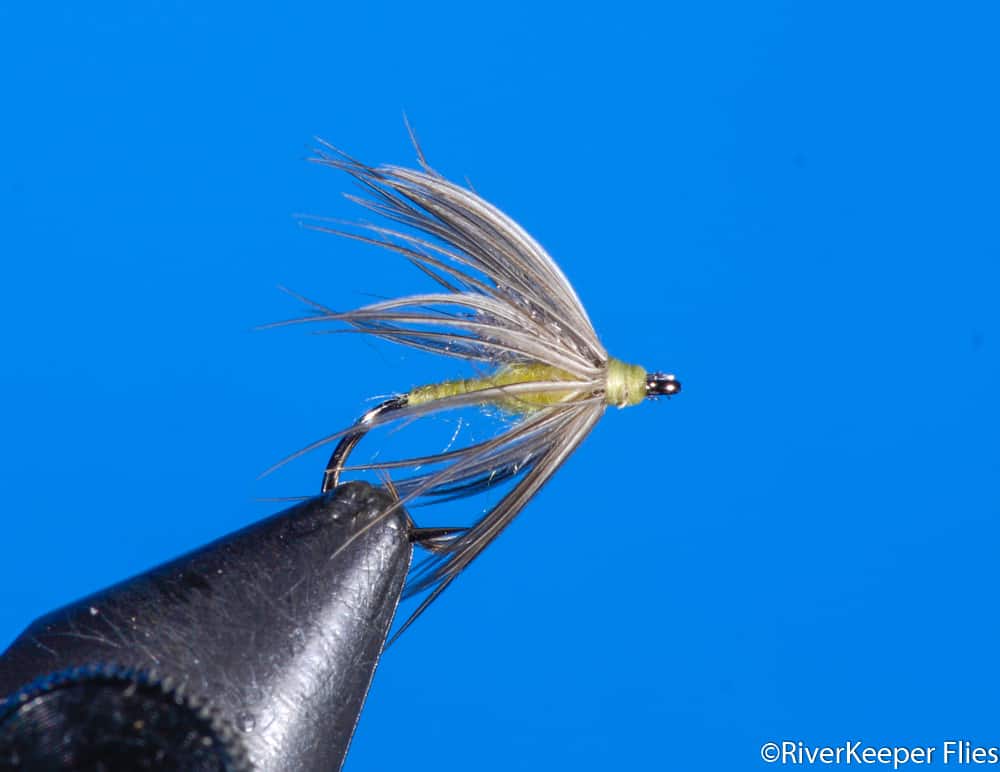
RiverKeeper Soft Hackle Cripple
The RiverKeeper Soft Hackle Cripple is a fly my wife and I developed many years ago and this variation imitates a PMD with wings caught in the water’s surface. Check out last week’s Fall PMDs post to see images of these flies on the water. Like the Iris Caddis above, it tells the trout it isn’t about to fly away.
After creating the fly, I noted other fly tyers had come up with a similar pattern. We fish it as a dry fly and wait for the fish to rise and eat it. Change color and size to imitate any mayfly.



great post. What feather do you use for the size 18 soft hackle? I have difficulty finding feathers that have short enough fiber length. Frequently takes as long to find the right size feather as it does to tie the entire fly. Thanks for your advice.
Thanks for the Comment Aaron.
Tying size 18 soft hackles are tough, but doable. I use the covert feathers from mallard and green wing teal. Not every wing has the smallest feathers. It depends on who processes them. For more info, I’d point you to the fly pattern sheet. Details at the bottom of it. https://www.johnkreft.com/mayfly-fly-patterns/riverkeeper-soft-hackle-cripple/
I’ve started using emu feathers for soft hackle feathers. I think they work great, and look good too!
Hi John
Great article and thanks for including the tying demos. Guess I better get to tying these up. You have a really nice info in all your demos.
Thanks for the nice Comment Wayne!
John
Hi John,
Love the post and the flies you present here today. AND…as always, we really appreciate your great photography. Take care & …
Tight Lines – (Gretchen &) Al Beatty
Thanks Al! John