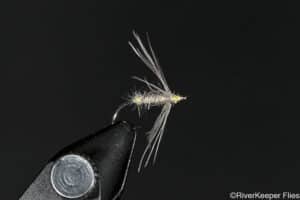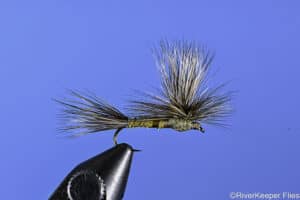
Quigley Gray Drake Cripple

This week’s Throw Back Thursday Fly is a Quigley Gray Drake Cripple.

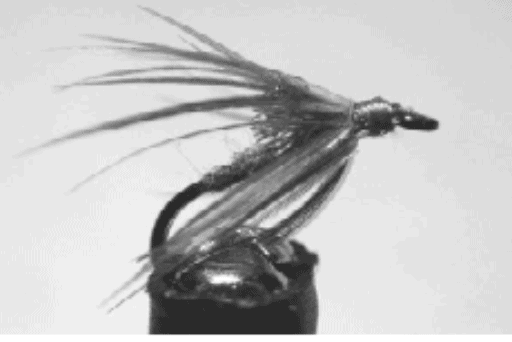
Quigley Cripple Gray Drake | www.johnkreft.com

I didn’t find a fly pattern sheet for a Quigley Gray Drake Cripple. This was tied for a customer and I pulled a few materials out I thought looked good for the fly. For instance, the body is a goose quill wrapped with black embroidery floss.

The following is information I wrote about the Quigley Cripple PMD in a prior TBT post.

The Quigley Cripple was developed by Bob Quigley in the late 1970’s for Northern California’s Fall River.

As the story goes, Bob was fishing a Humpy and catching fish with it. The wing got chewed up and he caught many more fish with the tattered fly. That got him thinking. Perhaps he should tie a fly with a wing facing forward. The result was the Quigley Cripple. I read where he is credited with inventing the term “cripple” to describe this form of mayfly.

The fly represents a mayfly emerging from the nymphal shuck. Many fish key on struggling bugs as they are an easy meal. Imitating this stage of insect can provide a great day of fishing.

The tail and body should be the color of the real nymph, whereas the thorax and wing will represent an adult trying to get free. Some versions use a marabou tail and body to imitate the nymph gills. A key identifying feature of the Quigley Cripple is the forward-facing wing.

You’ll find many more fly patterns these days with forward facing wings – the Mayfly Cripple from Blue Ribbon Flies and the CDC Last Chance Cripple from Rene Harrop are a couple that quickly come to mind. 

In my experience, fish key on cripples as they are easier to catch and don’t have to worry about them flying off.

Enjoy…go fish!
Similar Posts

  • Braided Butt Damsel

    This week’s Throw Back Thursday Fly is the Braided Butt Damsel. I first found this fly in Randall Kaufmann’s book Tying Dry Flies (1991) in the early 1990s. I tied the fly using the instructions from the book and took it to Antone Ranch in Eastern Oregon when it was a pay-to-play lake. I can still remember…

  • Bob Jacklin Salmonfly

    This week’s Throw Back Thursday Fly is a Bob Jacklin Salmonfly. My friend Jim Fisher loaned this #4 salmonfly to me for this post and told me it was tied by Bob. I wrote a previous TBT post featuring Jacklon’s Salmonfly, a different version than the image above. Jacklin is a fixture in West Yellowstone,…

  • The Grouse Hackle

    This week’s Throw Back Thursday Fly is the Grouse Hackle, a fly from the mid-1800’s. I’m always searching for the next Throw Back Thursday Fly, using a variety of sources for inspiration. I’ve used Mike Valla’s The Founding Flies (2013). The first chapter is about Thaddeus Norris (1811-1878) and the Grouse Hackle fly is mentioned….

  • Lee Clark’s Twisted Body Stone

    This week’s Throw Back Thursday Fly is Lee Clark’s Twisted Body Stone. The Twisted Body Stone is a different technique of using 100% polypropylene to create a body to imitate larger flies. Lee is better known for his original Clark’s Golden Stone shown below using the same material to imitate a body with it combed…

  • The Rose

    This week’s Throw Back Thursday Fly is The Rose. The Rose is a fly from the collection of Mary Orvis Marbury. I’ll call it a “variant” as I didn’t have the original materials to tie the fly. I used a Golden Pheasant body feather for the hackle and added black ostrich herl at the head…

Leave a Reply

Your email address will not be published. Required fields are marked *