Importance of Mayfly Spinners

I sometimes forget about the importance of mayfly spinners. I was on the river the other night with no visible activity. I decided to blind-cast in a couple locations where I know trout live. What fly should I tie on? I remembered PMD’s had been hatching recently and knew from past experience a Rusty Spinner would be a good choice. I tied one on.

Do you recall what spinners are? They are the final stage of a mayfly’s life. And they can be very important to the fly fisher!

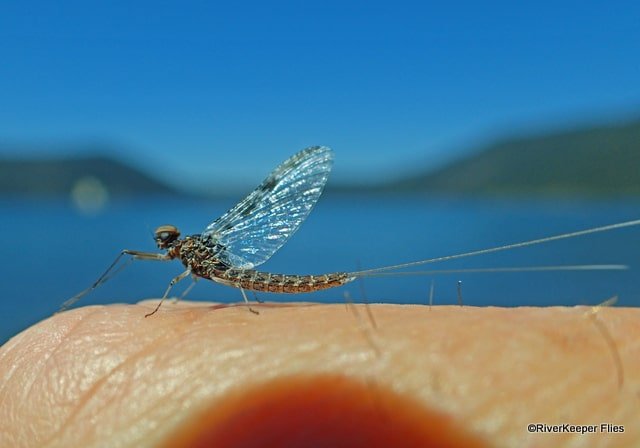
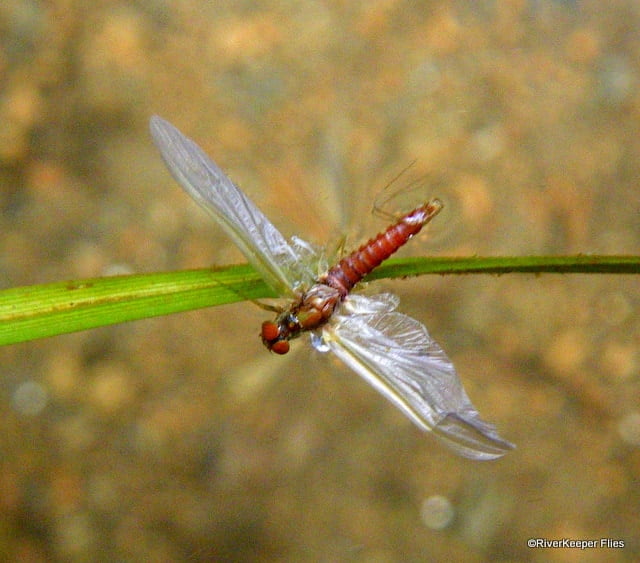
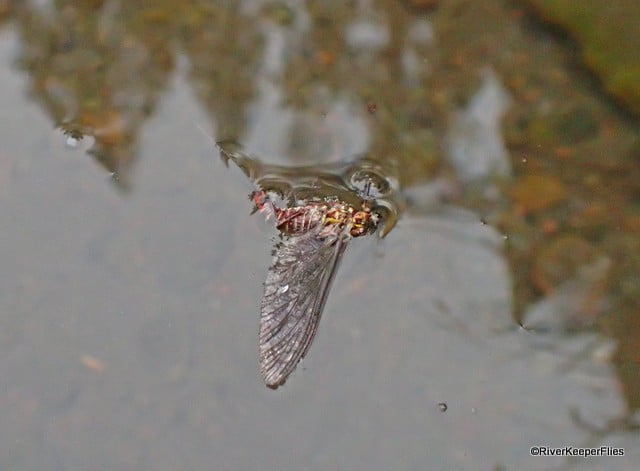
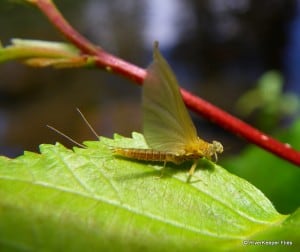
Here are a few real mayfly spinners

Callibaetis

Callibaetis Spinner - Ennis Lake | www.johnkreft.com
East Lake Callibaetis Spinner | www.johnkreft.com

PMD

Rusty Spinner | www.johnkreft.com

Green Drake

Green Drake Spinner on Water | www.johnkreft.com

Lastly, here is the smallest…a size 24 or 26.

Trico

Trico Spinner from Missouri River | www.johnkreft.com

The main characteristic to identify the spinner phase of a mayfly are the clear, opaque wings which lay outstretched and flat on the surface film.  These are called hyaline wings and provide an extremely reflective surface which I think attracts fish. You can see the similarity of wings in all the photos.

I wrote about spinners in other RiverKeeper Flies posts – Mayfly Spinners and Spinners. To learn more about the mayfly life-cycle, read Pale Morning Duns – PMDs.

If you see dimples on the water from a trout, it has probably sipped a PMD spinner.

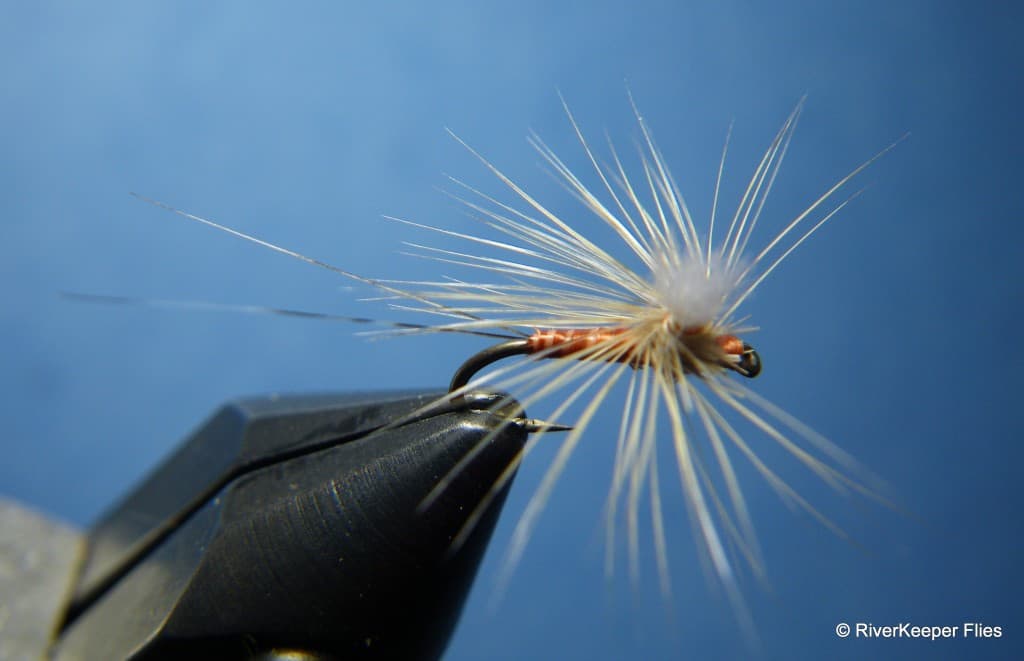
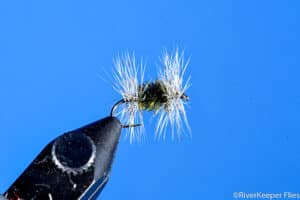
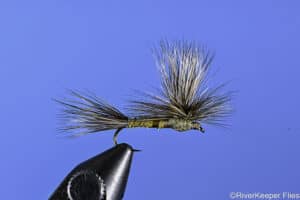
How about a few flies to imitate this stage? I believe the silhouette of the transparent wing is a key characteristic to imitate mayfly spinners.
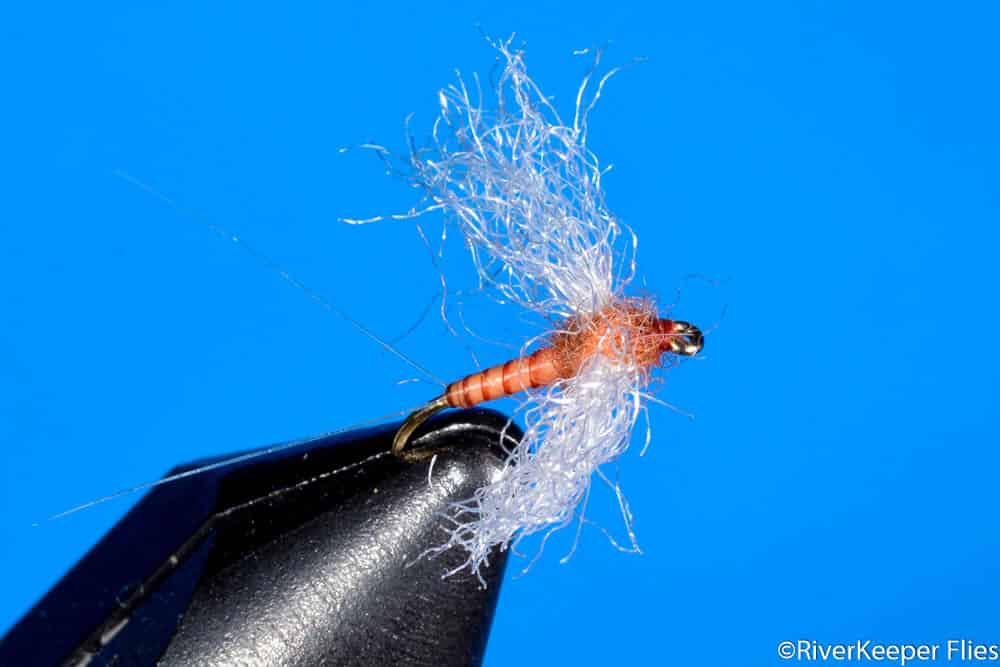
Rusty Spinner – Biot Body

Rusty Spinner Biot Body | www.johnkreft.com

Callibaetis Spinner

Callibaetis Spinner | www.johnkreft.com

Rusty Paraspinner

Rusty Paraspinner | www.johnkreft.com

Trico Spinner

Trico Spinner | www.johnkreft.com

I seem to get caught up in using mayfly cripples and dun fly patterns and forget about the importance of spinners. Trout eagerly take these flies.

Here is a Youtube video I took on Ennis Lake of a Trico Dun turning into a Trico Spinner.

Remember my original story? I did catch one unsuspecting rainbow with the Rusty Spinner I tied on the end of my line. It saved the day!

Enjoy…go fish!

Similar Posts

  • Snipe and Purple

    This week’s Throw Back Thursday Fly is the Dark Snipe or Snipe and Purple. The Snipe and Purple is another old soft hackle fly pattern listed in The North Country Fly – Yorkshire’s Soft Hackle Tradition (2015) by Robert L. Smith. Many of these older soft hackle fly patterns come from the Yorkshire Dales in northern England….

  • Updated April Fly Box

    I wrote a post a few years ago entitled My April Fly Box. I tried to provide some ideas for you to consider when filling your fly box. I’m encouraged this time of year because more insects begin to show in April, whereas winter seems to concentrate on small flies, like Blue Wing Olives in…

  • Favorite Salmonfly Patterns

    The word on the street this week is Salmonflies are beginning to hatch. While it may be early for your river, these big bugs will be available for several weeks. So I thought I’d provide a few pictures of the real bug and offer some of my favorite Salmonfly patterns I plan to carry in my fly…

  • Silver Stork

    This week’s Throw Back Thursday Fly is the Silver Stork, one of the wet flies Ray Bergman cataloged in his book entitled Trout, first published in 1938. The Silver Stork is from Plate No. 8. I tried to research a little history for this fly, but was unable to find any. If you have a little history about…

  • White Miller Dry Fly

    This week’s Throw Back Thursday Fly is the White Miller dry fly. This is a fly a customer gave me as a sample to tie for him, a size 12 short-shank hook. I did some quick research on a White Miller dry fly and couldn’t find much at all about the origins of the fly….

Leave a Reply

Your email address will not be published. Required fields are marked *