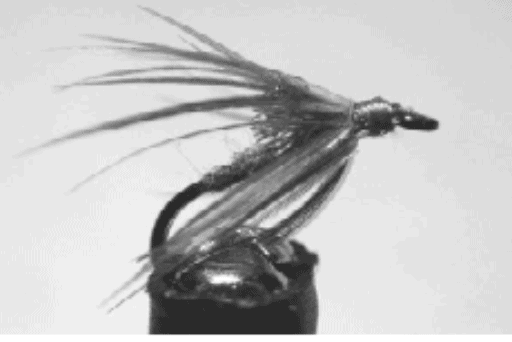
I’ve been at the fly tying bench lately working on orders. I’m currently tying a few Green Drake imitations. It got me thinking about three important hatches I’m really looking forward to this year…Green Drakes, Salmonflies & Golden Stones, and Caddis. Are you looking forward to a favorite hatch? Yes, my mind wanders a little as I tie flies and thought about what flies I’d select if I only had two dry flies for each hatch. OK, it isn’t two flies, but six total!
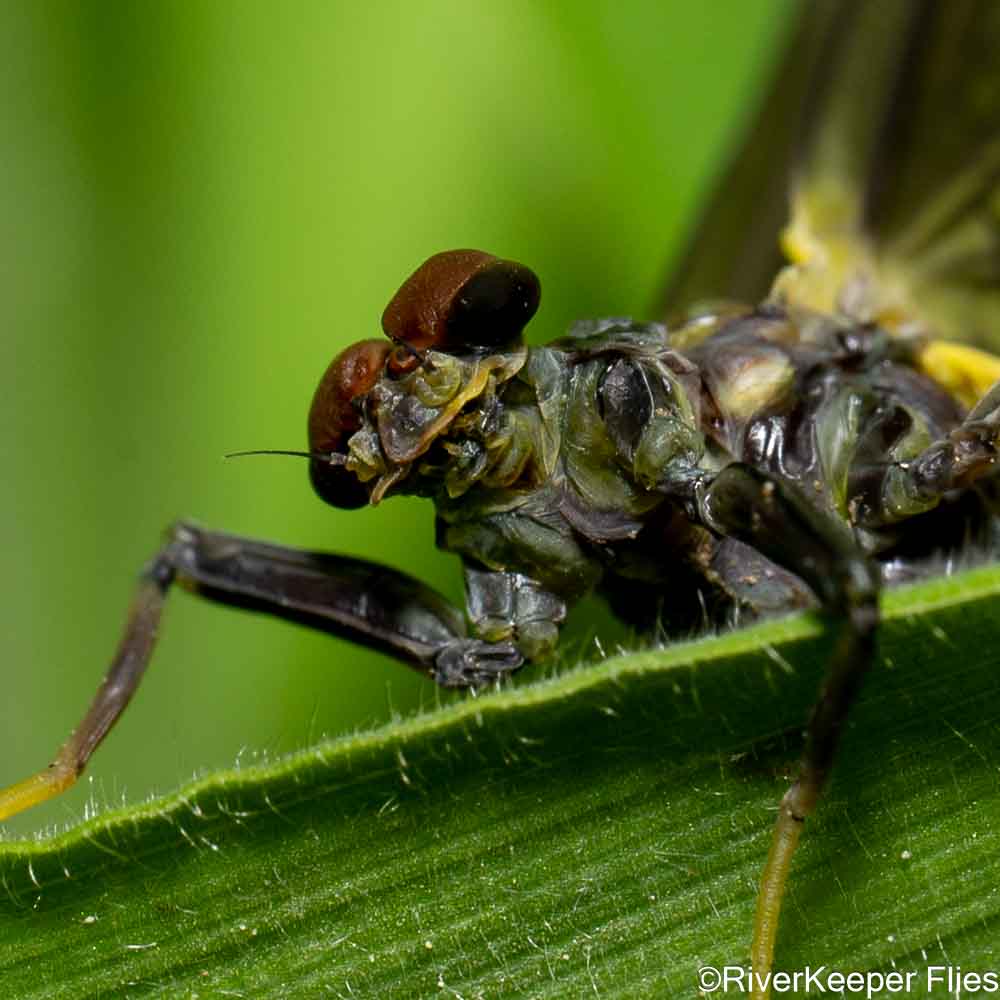
For me, Green Drakes are my favorite hatch of the year.

These are big bugs, size 10 – 8 on my local waters.
My favorite dry fly to imitate the natural is a Sparkle Dun, which is no surprise if you are a regular here at RiverKeeper Flies.
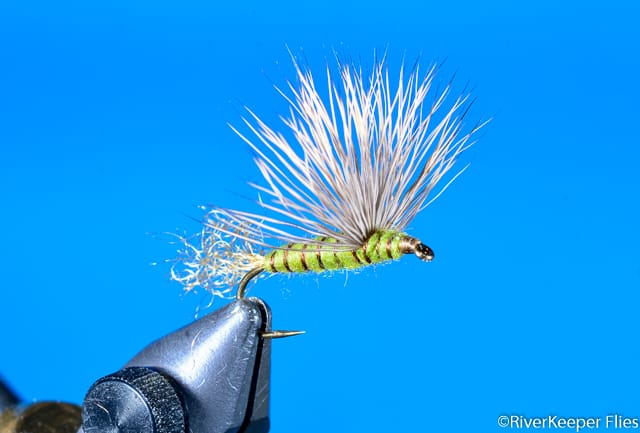
The Sparkle Dun fly isn’t new by any means. I came up with a color scheme a few years ago that works for me. And the fish seem to agree.
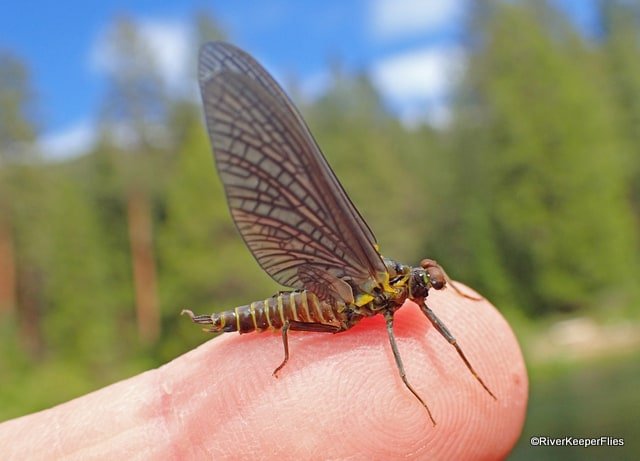
Here is the other color I like, a gray/olive body.

I believe it’s successful because fish think it’s a cripple and can take their time moving to eat the fly. The tail emulates a nymphal shuck, so the fly is stuck and can’t fly away. Newly hatching duns float on the surface, drying their wings in preparation to fly. We watch fish follow these bugs before rising to eat them. It’s an incredible sight to see!
Sometimes they fly a short distance and settle on the water before trying to take flight again, making them an easy meal.
My other fly is the RiverKeeper Soft Hackle Cripple.
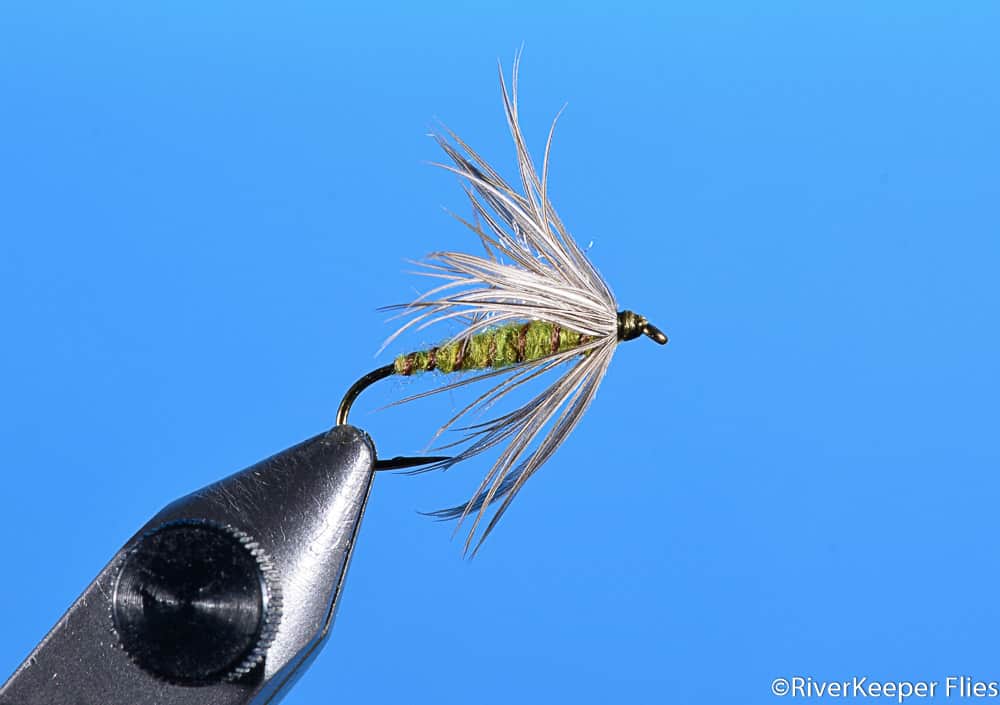
This fly imitates a crippled dun floating on the surface with its wings caught in the film. I’ve seen many naturals like this and fish key on them at times.
About the same time Green Drakes start hatching on the Metolius River, I hear about Salmonflies and Golden Stones on the Middle and Lower Deschutes River. I’m torn which hatch to fish.
It’s always exciting to find a few nymphs along the shore beginning to hatch. Here are the Salmonflies.

Here the wings are unfurling.
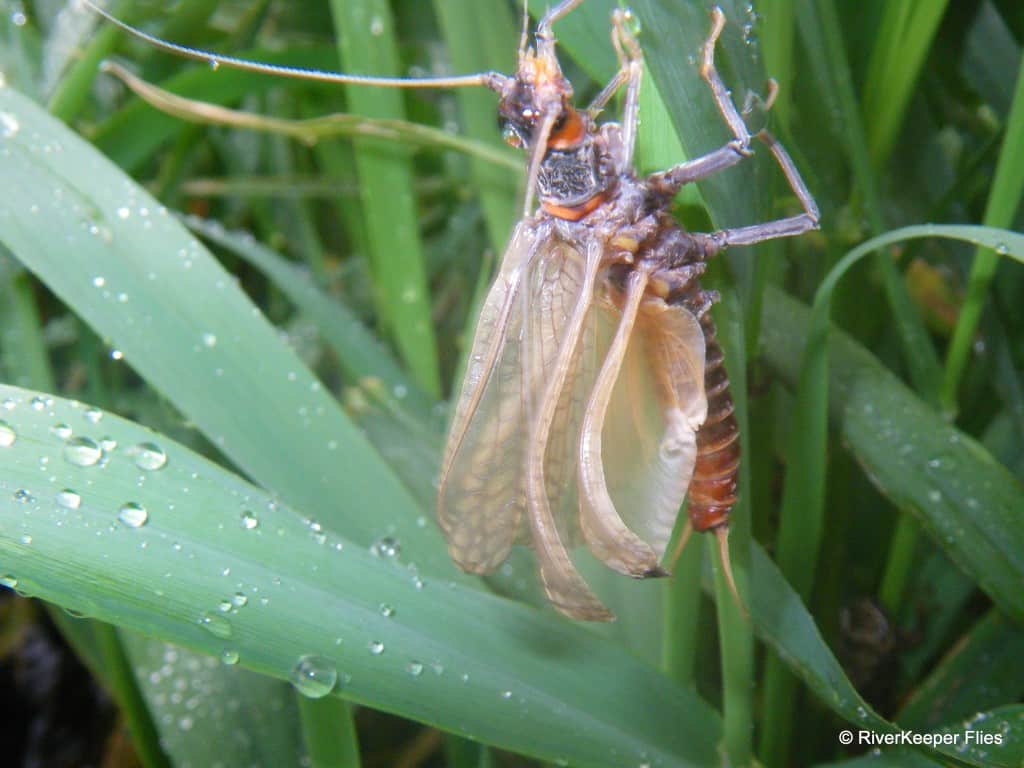
And a fully developed adult.

A female with egg sac.

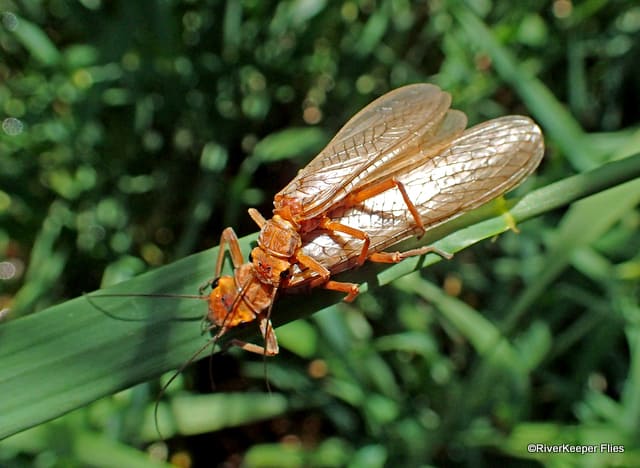
And Golden Stones, the smaller male is on top of the female.
My favorite fly these days to imitate a Golden Stone is Clark’s Lady Stone.
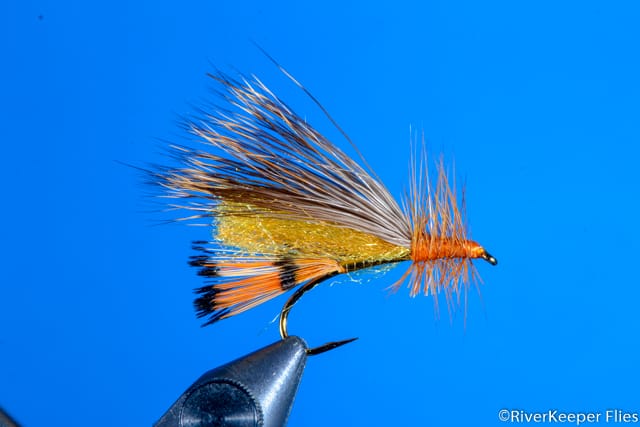
Adding a tail to Clark’s Golden Stone is a wonderful way to imitate a female with an egg sac.
The second fly is a little tougher for me to decide. I could choose the Purple Chubby Chernobyl or a Norm Wood Special.
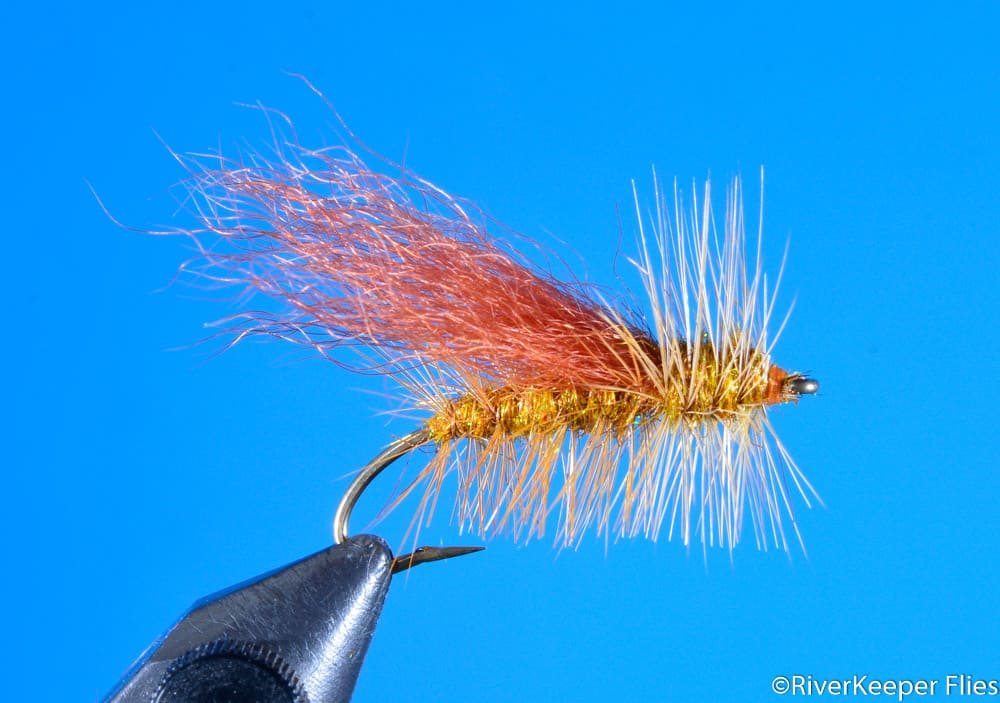
Purple is always a great color for a Chubby, but I think if I had to pick one fly, I’d stay with a Norm Wood Special. There’s something about the wing color and profile the fish seem to like. It’s an older fly pattern you might not find these days in your local fly shop, which might be one of the reasons it still works so well…not everyone is fishing the fly.
We’ve been fortunate to fish the Madison River, MT during our summer fly fishing road trips and found terrific Caddis hatches with lots of rising fish!
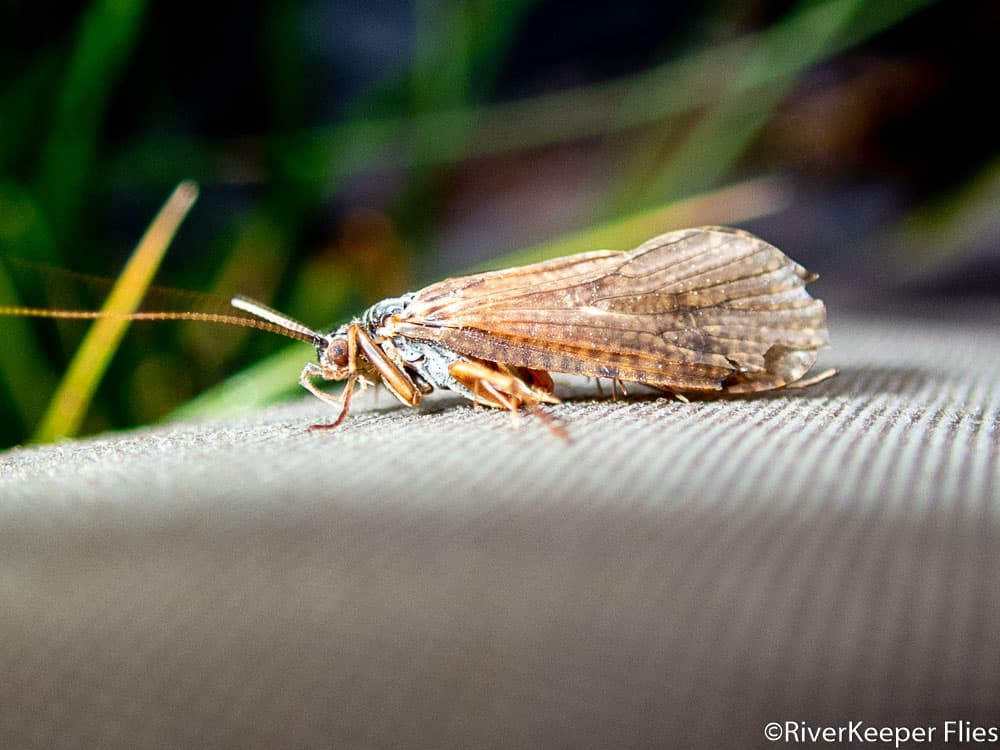
Two of my favorite adult fly patterns are an X Caddis…
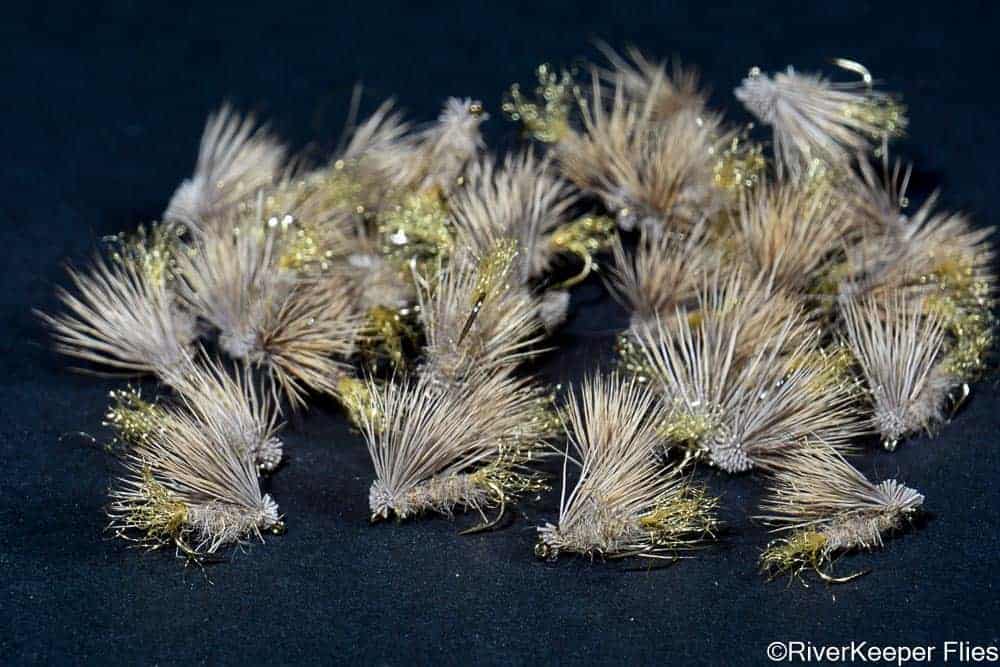
…and Iris Caddis. Both flies have been really effective, with the Iris working best at dusk.
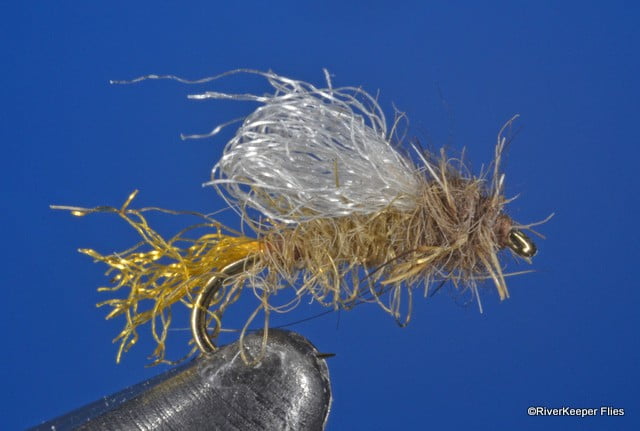
Those are my six flies. What are yours?
Enjoy…stay safe, go fish!




For Metolius Green Drakes, it’s the Bunse Natural.
Deschutes, agree, Norm Wood Special or Clark’s Stone (although I haven’t tried the Lady Stone variation)
Well, I’ve been reading your blog for a few years, but I’ve never felt moved to respond until this morning. I ran with the headline at first, thinking two flies total. I settled on a parachute Adams and an iris caddis.
Most of the year I fish in the northern and central lower peninsula of Michigan. Parachutes fish well here. I will admit I was torn between the Adams and the Robert’s yellow drake, an idiosyncratic regional pattern. It is tied in various sizes here, representing Hex to sulfur, and everything yellowish in between. The White Knot version is a tremendous fish catcher during Isonychia spinner falls. But I don’t really know how well these flared deer hair flies fish away from our tannic rivers.
One week a year I fish the Bighorn, and the iris caddis is a must-have there. I don’t fish a lot of caddis around home. I muse that a size 6 to 10 would catch some fish when stoneflies are on the water. I’ll have to try it sometime.
Anyway, I just want to say that I am grateful for the information you share.
Thanks for leaving a Comment Michael…it’s nice to know my posts provide some value.
John