Which fly fishing knots do you use? It’s important to tie good strong knots. Think of all the time casting, casting, casting only to lose a fish because your knot slips or breaks. Why would it do that?

Let’s discuss knot slippage. Whenever a knot is tied and trimmed, a tag remains. If a knot isn’t “seated” properly, it will at the most inopportune time, when coming tight on something – namely a fish. That allows the leader to slip through the wraps created when tying a knot. Not a good thing. Ever have a curly cue where your fly was tied on? That’s what I’m talking about.
Let me tell a quick story. Several years ago my wife and I decided to get into lake fly fishing. Back then, I tied all the knots…no need to do that anymore! She ties strong knots. Anyway, I’d heard that fluorocarbon leader and tippet were THE thing for lakes because it is nearly invisible to the fish. OK I thought, I need every advantage I can get! I’ll give it a try.
We didn’t need a full tapered leader, just a short one so I pulled out a couple of spools of tippet material and used my trusty blood knot to join them together. And we fished…and we hooked fish…and we lost fish. There was a curly cue at the end of the line, a telltale sign the knot slipped out. So I tied more blood knots, checking each knot carefully and lost more BIG fish. Did I mention I was tying knots for my wife…and she was losing BIG fish. I felt bad.
Well, that was when I learned about the surgeon knot. It’s easier to tie, doesn’t slip as bad and you know what? We landed those BIG fish.
Do I use a blood knot anymore? Very seldom. I’d learned my lesson. Only when I decide to tie my own leaders. It’s a good knot for the thicker sections.
What do I use now? My knot of choice is a triple surgeon for tying on tippet to my leader. Triple surgeon vs double surgeon. I don’t have any data if an additional wrap works better, but it makes me feel better when I’m tying 5x to 6x. And it works!
Here’s the two fly fishing knots I use on a regular basis (links to www.netknots.com – a good site):
I use these two knots almost exclusively. I only need two knots to fish. I tie these a lot and am very confident they are tied correctly.
When tying good, strong fly fishing knots, two key points that can’t be stressed enough:
- moisten the knot
- draw the knot tight
Why moisten a knot? Doing so will prevent the leader from overheating when the knot is pulled tight, which may cause it to weaken and fail.
Drawing the knot tight or “seating” the knot is very important. Slowly tighten the knot. You may not need to pull on both ends…just one end. Follow the directions for tying each knot.
I’ll use the improved clinch knot to highlight drawing the knot tight.
Don’t pull on the running line and tag. If you do, it will look like this:
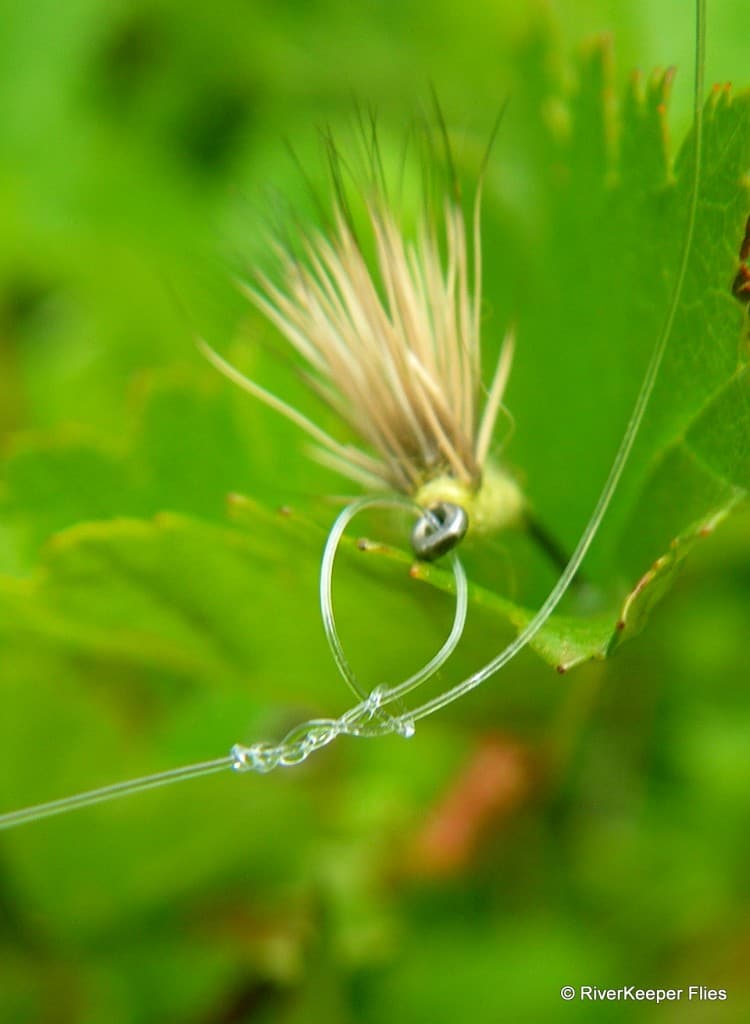
To tighten the improved clinch knot, hold onto the fly and pull on the running line. It begins to tighten and looks like this:

But don’t stop there. Continue pulling on the running line. The finished improved clinch knot will look like:
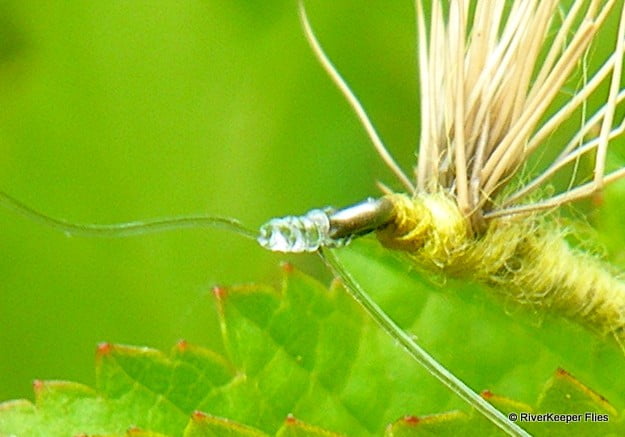
Remember, if the knot doesn’t “seat” properly, the tag end has a good chance of slipping out when the knot does tighten…like on a fish. Too late then!
I wonder what the fish sees with that knot. Sure looks clunky to me, but it’s really a size 16 Sparkle Dun and 6X leader.
And occasionally, I might use these other fly fishing knots:
- nail knot – used to connect leader to fly lines if no loop is present
- perfection loop knot – used for loop to loop applications
- blood knot – used for connecting different sections of monofilimant
- turle knot – used for steelhead and salmon fly connections
It may take a few tries of tying these knots because I use them infrequently.
I found another knot in the last couple of weeks that looks promising – the Non-Slip Loop Knot (also known as a Duncan Loop Knot). I’ll be trying it in the near future. Perhaps it will work for nymph fishing when I need action; or on a small dry fly; maybe steelhead flies. We’ll see…
What’s the key to tying good fly fishing knots? Practice, practice, practice. Practice at home in front of the TV when a commercial is on. Not out on the water when an epic hatch comes off. Hard to tie quality fly fishing knots when your hands are shaking!
So settle on a few of your favorite fly fishing knots and become an expert tying those knots.
Till next time, tight lines and strong knots!
Enjoy…go fish!



Good treatment on knots. Can’t wait to return to Bend and resume my fishing.
Steve
John
Good seeing you and Karen across the river on Tuesday night.
I recently learned the Davy knot (by Davy Wotton).
This knot is easy to tie and is the smallest knot that I have ever seen on the fly.
It hasn’t failed on any fish yet.
Not sure if you have ever used that one or not but I have started using it in place of the improved cinch knot.
Bob.
Thanks for the tip Bob. I’ll look up the Davy knot!