This week’s Throw Back Thursday Fly is the Atherton No.4 dry fly.
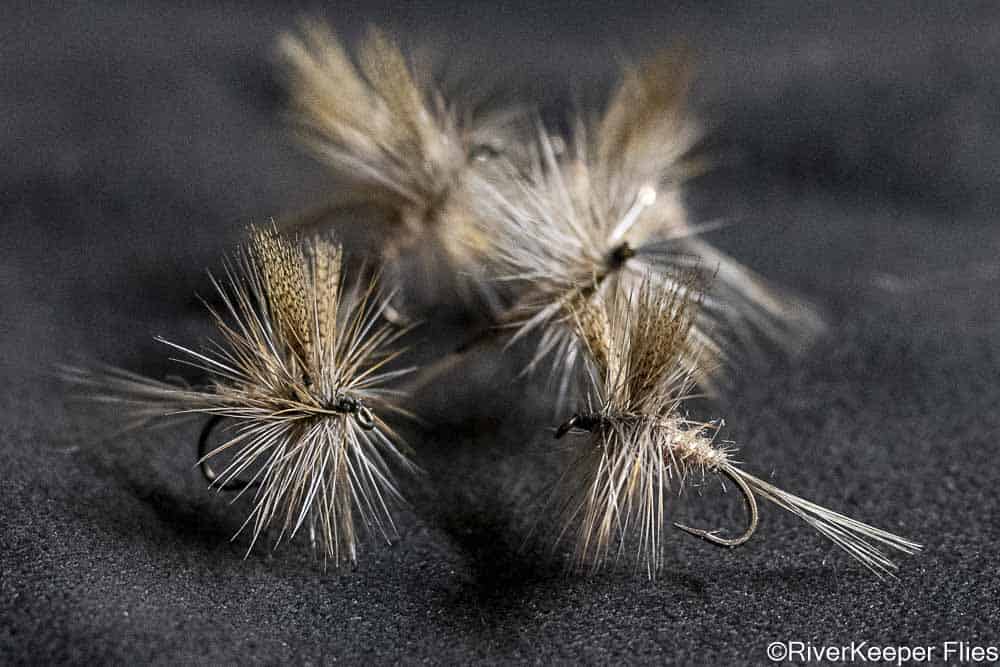
John Atherton (1900 – 1952) was an artist by trade and incorporated his impressionistic art into the flies he tied. The hackle of the Atherton No. 4 are mixed medium dun and Cree to create a life-like fly imitating the real insects. The body is a blend of natural seal fur mixed with dyed red seal, small amount each of hare’s ear and muskrat fur.
Interestingly, he didn’t name the flies, choosing instead to number his dry flies from 1 to 7, representing lighter to darker shades of mayflies. He also created wet flies and nymphs with the same naming convention and impressionistic characteristics.
His flies were created with “the appearance of life” as a central theme for the flies he developed to replicate colors and tones, textures, and light reflections combined in natural insects. Taking a closer look at the flies and you’ll see the mixture of materials making the body and a round tinsel. For hackle, Atherton used mixtures of Cree or brown, dun, and ginger mixed with grizzly to create the life-life image of the real insect. For a wing, he liked wood duck because of the “speckled look” created lifelike appearance. Several of the bodies utilize seal fur blended with other materials for an added sparkle.
Here are links to the other Atherton flies I’ve featured:
This Amazon link is to Atherton’s book, The Fly and the Fish, re-issued in 2016. The original book was published in 1951.
If you’d like more information about John Atherton, I encourage you to read Robert Smith’s John Atherton Dry Flies post on his website, The Sliding Stream. Smith is the author of an excellent book about the history of soft hackles.
This link is for Mike Valla’s book The Founding Flies where he dedicates a chapter to John Atherton.
The North Country Fly: Yorkshire’s Soft Hackle Tradition by Robert L. Smith – I purchased mine from The Rogue Anglers website.
Fly Pattern
Tail:
Cree hackle barbs or ginger and grizzly hackle barbs mixed
Wing:
Wood duck
Body:
Natural seal fur mixed with dyed red seal, small amount each of hare’s ear and muskrat fur
Rib:
Narrow oval gold tinsel
Hackle:
Medium dun and Cree mixed
Enjoy…go fish, stay safe!
(John Kreft is a participant in the Amazon Services LLC Associates Program, an affiliate advertising program designed to provide a means for sites to earn advertising fees by advertising and linking to amazon.com.)